International Desk:
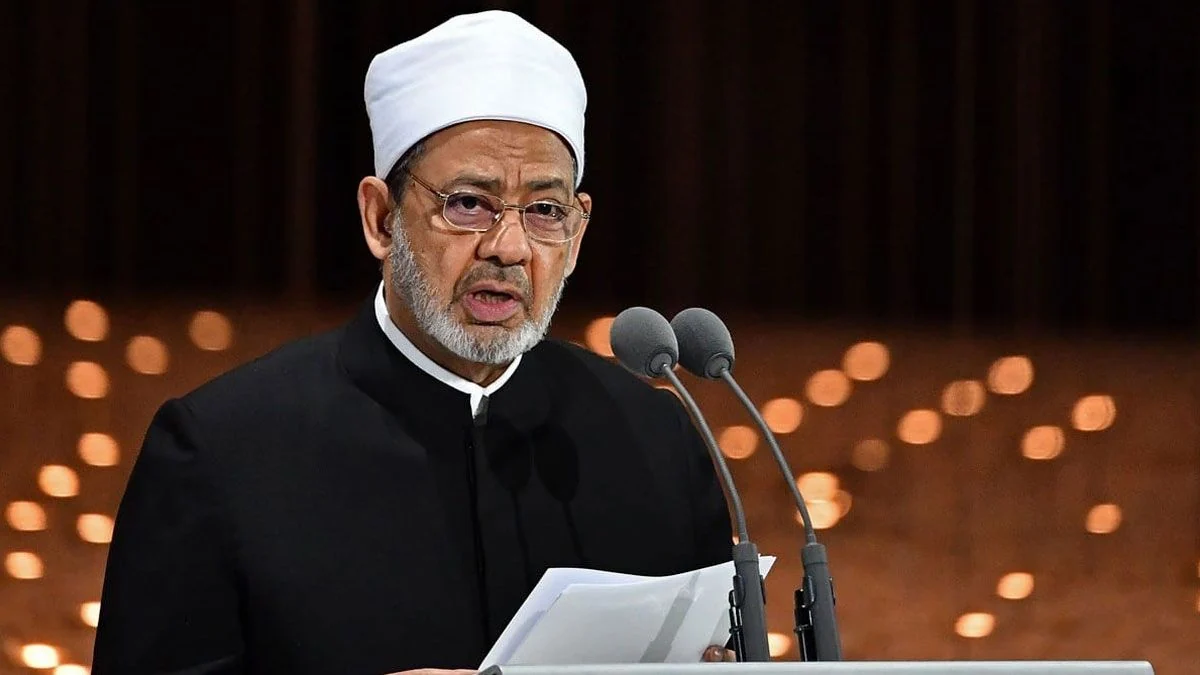
At a time when religious extremism, conflict and social divisions continue to challenge communities across the world, Al-Azhar Grand Imam Ahmed al-Tayeb has secured the sixth position in the 2026 list of the world’s 500 most influential Muslims, highlighting his role in promoting religious moderation and interfaith understanding.
The ranking, published in The Muslim 500: The World’s 500 Most Influential Muslims, places the Egyptian scholar among the top 10 influential Muslim figures globally. His recognition reflects decades of religious scholarship, institutional leadership and advocacy for peaceful coexistence.
Al-Tayeb has consistently spoken against extremism and terrorism, arguing that the core teachings of Islam uphold justice, compassion, human dignity and respect for others. His public engagement has focused not only on religious education but also on building understanding among people of different faiths.
Born on January 6, 1946, in the village of Al-Qurna in Egypt’s Luxor region, al-Tayeb grew up in a family with a strong religious tradition. He pursued Islamic studies at Al-Azhar University, one of the world’s oldest centres of Islamic learning.
He graduated from its Faculty of Usul al-Din in 1969, completed his master’s degree in 1971 and earned a PhD in Islamic philosophy in 1977. His academic career included teaching and research, alongside engagement with contemporary philosophical and intellectual debates.
In 2001, he was appointed Egypt’s Grand Mufti. He became president of Al-Azhar University in 2003 and, on March 19, 2010, assumed the position of the institution’s 48th Grand Imam, also known as Sheikh al-Azhar.
One of the most prominent milestones of his international engagement came in 2019, when he signed the Document on Human Fraternity in Abu Dhabi with Pope Francis, the then head of the Catholic Church. The document called for mutual respect, human dignity and peaceful coexistence among people of different religious backgrounds.
As chairman of the Muslim Council of Elders, al-Tayeb has also supported initiatives aimed at encouraging dialogue, countering religious intolerance and promoting moderation.
His approach places particular emphasis on education and scholarship as responses to distorted religious interpretations and extremist ideologies. He has argued that knowledge and sound understanding are essential to addressing religious misconceptions and preventing intolerance.
His sixth-place ranking in the 2026 edition of The Muslim 500 is a significant international recognition of his influence. Beyond an individual achievement, it also draws attention to the role of religious leadership in addressing contemporary challenges through dialogue, intellectual engagement and respect for human dignity.
As head of Al-Azhar, al-Tayeb continues to represent one of the most prominent voices in contemporary Islamic scholarship, with his message centred on coexistence rather than confrontation.
What do you feel about this post?

Like

Love

Happy

Haha

Sad