Dr. Mohammad Idris Bhuiyan:
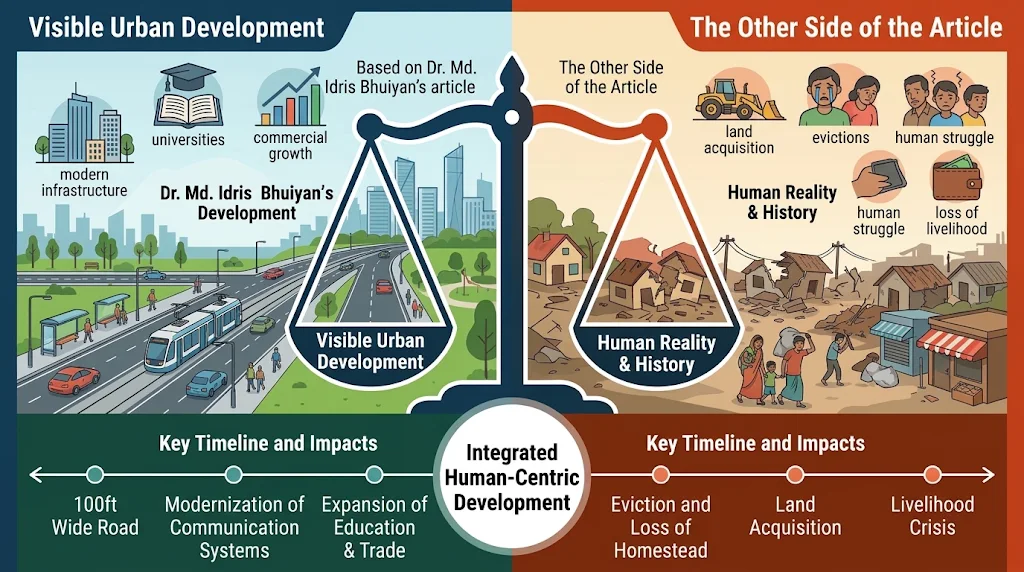
Looking at today’s scenic, 100-foot-wide Madani Avenue, many may find it difficult to imagine the long and challenging history behind the development of this road and its modern infrastructure. Its story is intertwined with land acquisition, evictions, people’s tears, protests, administrative complexities and numerous obstacles to development. Behind the construction and modernisation of a road, there are often stories of struggle and hardship experienced by countless people.
The area stretching from the intersection with Pragati Sarani in Bhatara to the Naria Bridge over the Balu River once looked very different from what it does today. The wide and attractive roads, planned residential areas, universities, commercial establishments and modern recreational facilities that now characterise the area had not yet developed. Over time, urbanisation transformed the entire landscape.
The presence of United International University, United City, the southern entrance and connecting roads of Bashundhara Residential Area, and the expanding transport and commercial activities in Satarakul, Solmaid and Madbarbari are all part of this broader process of urban expansion. Madani Avenue is therefore more than just a road; it represents an important chapter in the transformation of urban development, connectivity and economic activity in the eastern part of the capital.
However, this transformation did not happen overnight or without difficulties. Acquiring the land required for road construction and expansion, recovering illegally occupied public land, and dealing with various legal and administrative complications posed significant challenges. At different stages, the Rajdhani Unnayan Kartripakkha (RAJUK) and other relevant authorities had to take initiatives to remove unauthorised structures and recover land needed for the road.
Yet, the other side of this development process involved a difficult human reality. Many people affected by eviction drives alleged that they had not received adequate compensation or opportunities for rehabilitation. For some, their homes were their last shelter; for others, a small business was their family’s only source of livelihood. Faced with eviction, they protested and resisted in an effort to protect what little they had left. For them, the issue was not merely the loss of land or structures; it was the fear of losing the very foundation of their everyday lives.
Such situations also attracted attention at the humanitarian and international levels. In implementing development projects, both the interests of the wider population and the rights and livelihoods of affected people are important. Maintaining a balance between these two considerations is no easy task for the administration. When development is stalled, the long-term needs of city residents may remain unmet. On the other hand, neglecting the legitimate rights of affected people in the name of development can lead to social discontent and humanitarian challenges.
I had the opportunity to be involved in various development activities as a consultant to the Asian Development Bank (ADB) and the World Bank Group. During that time, I also spoke with urban development experts from international human rights organisations. From my experience, I have learned that coordinating the broader objectives of development with realities on the ground is crucial to implementing major infrastructure projects. It is necessary to ensure that development initiatives undertaken in the public interest are not unreasonably obstructed, while the legitimate rights of affected people are not overlooked. This requires a responsible and pragmatic approach.
Not everyone accused of obstructing development projects should be viewed in the same way. Some may attempt to delay a project for personal interests, while others may protest out of fear of losing their homes or their last means of livelihood. It is important to understand the distinction between these two realities. Alongside protecting project interests, development management must include listening to the grievances of affected people, properly assessing their claims, providing due compensation and, where possible, arranging rehabilitation.
Today, Madani Avenue offers a visible example of urban transformation. Improved connectivity, housing, educational institutions, business and commerce have created new opportunities for urban life. The road has made travel between the eastern part of the capital and other areas easier and has accelerated development in the surrounding neighbourhoods. Yet, the beauty of today’s avenue should not make us forget the history of people’s tears, protests and sacrifices.
We must remember that development is not merely a combination of concrete structures, asphalt roads, bridges and high-rise buildings. Its true meaning lies in improving people’s quality of life, ensuring safe housing, creating livelihood opportunities and securing a better future. If the benefits of a project reach the wider population, that is undoubtedly positive. However, it is equally important to ensure that the burden of achieving those benefits is not disproportionately imposed on disadvantaged and vulnerable people.
Over the course of my long experience, I have come to understand that major development projects rarely progress without challenges. They often require overcoming adversity, opposition, complexities and difficult decisions. But determination does not mean disregarding people’s suffering; rather, it means confronting realities and finding just solutions. As the English proverb goes, “When the going gets tough, the tough get going.” In other words, no matter how difficult the circumstances become, determined people find the strength to face challenges and move forward.
The present beauty of Madani Avenue reflects the possibilities of urban development. Its past, however, reminds us that behind every visible achievement in development lie people’s lives, dreams and experiences. Future urban development must therefore be more planned, humane and inclusive—ensuring that the pace of progress is maintained while people’s rights and dignity are protected.
What do you feel about this post?

Like

Love

Happy

Haha

Sad