

Tanvir Raihan:
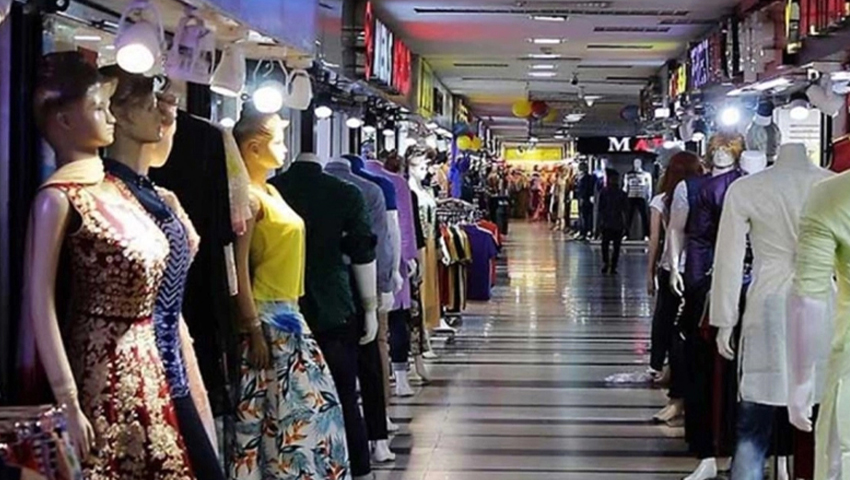
Dhaka’s once-bustling shopping malls are facing mounting business difficulties as fewer customers visit stores and sales continue to decline. Rising living costs, the growing popularity of online shopping, competition from newer commercial complexes and higher operating expenses are putting retailers under pressure. Some businesses have reported sales falling by more than half, while others are struggling to pay shop rents, staff salaries and utility bills.
The closure of Karnaphuli Garden City Shopping Complex in the capital’s Shantinagar area has become a visible example of the challenges facing traditional shopping destinations. Once a popular retail centre for middle- and upper-income customers, the complex offered a range of products, including clothing, footwear, cosmetics and jewellery. However, declining customer visits and poor sales eventually forced the owners to shut it down. Some shop owners have also decided to sell their businesses.
The difficulties are not limited to one shopping complex. Several established shopping malls across Dhaka, including Eastern Plaza, Eastern Mollika, Hossaf Tower, Mouchak Market, Police Plaza Concord and Shah Ali Market in Mirpur, are experiencing reduced customer traffic.
Retailers say that although sales have declined, fixed expenses such as rent, staff wages, electricity bills and service charges remain high. As a result, many small and medium-sized businesses are finding it increasingly difficult to remain operational.
Eastern Plaza in Hatirpool, once regarded as one of the capital’s prominent shopping destinations, has also lost much of its former appeal. Known for its escalators, lifts and wide range of products under one roof, the mall was once familiar to shoppers across the country. Its advertisements were also broadcast on television.
But the growth of modern shopping complexes and the expansion of online retail have changed the competitive landscape. During a recent visit, several shops on the upper floors were found closed, while others remained vacant. Customer presence on the ground floor, where cosmetics, clothing and sports goods are sold, was also limited.
Shopkeepers said many customers now prefer online platforms, where they can compare prices and take advantage of promotional offers. At the same time, the emergence of newer shopping malls has intensified competition for traditional retail centres.
Mohammad Helal Uddin, president of the Bangladesh Shop Owners Association, identified shorter shopping hours and declining purchasing power as major reasons for the fall in sales.
“One of the main reasons for the decline in customers and sales at shopping malls is the reduction in opening hours. The peak sales period for shopping malls is in the evening. But these malls are required to close by 8pm, which is reducing customer visits,” he said.
He added that the declining purchasing power of consumers was another factor affecting businesses. The association is discussing with the government a proposal to extend shopping hours by one hour, hoping that longer opening hours would help attract more customers.
Eastern Mollika Shopping Complex on Elephant Road is also experiencing a decline in customer traffic. The mall, known for its clothing, sarees, wedding accessories and cosmetics, once attracted shoppers with its wide range of products and relatively affordable prices.
Nusaiba, a salesperson at Colour Cosmetics on the ground floor, said sales had fallen considerably.
“Business is not good. One major reason is that shopping malls close early. Previously, many office workers would return home and then come to the market around 8pm to shop until 10pm. But now, as the mall closes at 8pm, we are losing those customers,” she said.
Another retailer said sales generally improve during Eid and other festivals, while the rest of the year is relatively slow. During off-peak periods, shopkeepers mainly try to generate enough revenue to cover rent and employees’ salaries.
The situation is similarly difficult in the Mouchak area. At Fortune Shopping, a salesperson at a footwear store said monthly sales, which previously exceeded Tk 300,000 to Tk 500,000, had fallen to less than half. On some days, the store records no sales at all.
Monir Hossain, a salesperson at SD Cosmetics Corner in the same mall, said rising import costs and operating expenses were making products increasingly expensive.
“Products that previously cost Tk 1,000 now cost Tk 1,400. After adding even a small profit margin, the prices become much higher. Electricity bills, shop rent and service charges are also increasing. When these costs are added to product prices, customers often lose interest in buying,” he said.
Hossaf Tower Shopping Complex in Mouchak is also facing a sharp decline in business. Many shops on the ground floor were found closed during a recent visit, while the second-floor corridors had few shoppers.
Mofazzal Hossain Sharif, owner of Janani Cloth Store, said sales had fallen to less than half their previous level. On some days, he said, he could not sell even a single piece of thread.
He also said the closure of the central air-conditioning system and escalators had made the shopping environment less comfortable for customers.
Saiful Islam, a salesperson at Raj Fabrics in Mouchak Market, said sales had improved slightly during the Durga Puja season but had since slowed considerably. He said many people were spending most of their income on food and other essentials, leaving little room for spending on clothing, cosmetics and jewellery.
Police Plaza Concord, a prominent shopping complex beside Hatirjheel in Gulshan, has also seen a significant decline in sales. Retailers said business had fallen by around 60 per cent compared with five years ago. Some described the current situation as worse than during the Covid-19 pandemic.
A recent visit to the mall found relatively few customers despite shops offering discounts and promotional deals on clothing, footwear and fashion products.
Businesspeople said many visitors now came to the mall mainly for leisure and entertainment rather than shopping, particularly on weekends. They attributed the decline in purchases to lower purchasing power, higher product prices and broader economic pressures.
However, some customers believe the shift towards online shopping is also changing consumer behaviour.
Nusrat Jahan, who was shopping at Police Plaza, said online platforms offered opportunities to compare prices and find promotional deals, encouraging many consumers to shop online instead of visiting physical stores.
The situation is also affecting retailers in Mirpur-10, one of Dhaka’s busiest commercial areas. Shopkeepers had expected business to improve after the city corporation removed roadside vendors, potentially directing more customers towards shopping complexes. But the anticipated increase in sales has not materialised.
At Mahim Crockery Garden on the ground floor of Shah Ali Plaza, owner Mohammad Jasim Uddin said a woman customer had purchased products worth Tk 1,650 during the morning, representing the day’s sales at that point.
Mohammad Moin Uddin, owner of Bombay Collection on the third floor of the plaza, has been in business since 2003. He said he had never experienced such a prolonged downturn.
“I have never seen business conditions this bad in my entire career. Sales have been almost nonexistent for several months. Yet I have to pay around Tk 14,000 a month in electricity bills, in addition to shop rent and employees’ expenses. The situation has become so difficult that I am considering leaving the business,” he said.
Retailers in Mirpur’s Benarasi Palli, known for its sarees and traditional textiles, are facing similar difficulties.
Mohammad Sohel, a sales representative at Resa Benarasi near the entrance to the area, said rising commodity prices had reduced consumers’ spending on clothing.
“People have cut back on shopping because of rising prices. Even on weekly holidays, when we would normally expect more customers, I have yet to make a single sale,” he said.
The experiences of retailers across these shopping destinations point to a combination of pressures rather than a single cause. Lower consumer purchasing power, competition from online platforms and newer shopping centres, shorter opening hours and rising operating expenses are making it increasingly difficult for businesses to survive.
Without a recovery in customer spending and sales, more retailers may be forced to close their shops or leave the traditional shopping centres that once formed an important part of Dhaka’s retail landscape.
What do you feel about this post?

Like

Love

Happy

Haha

Sad