
Tanvir Raihan:
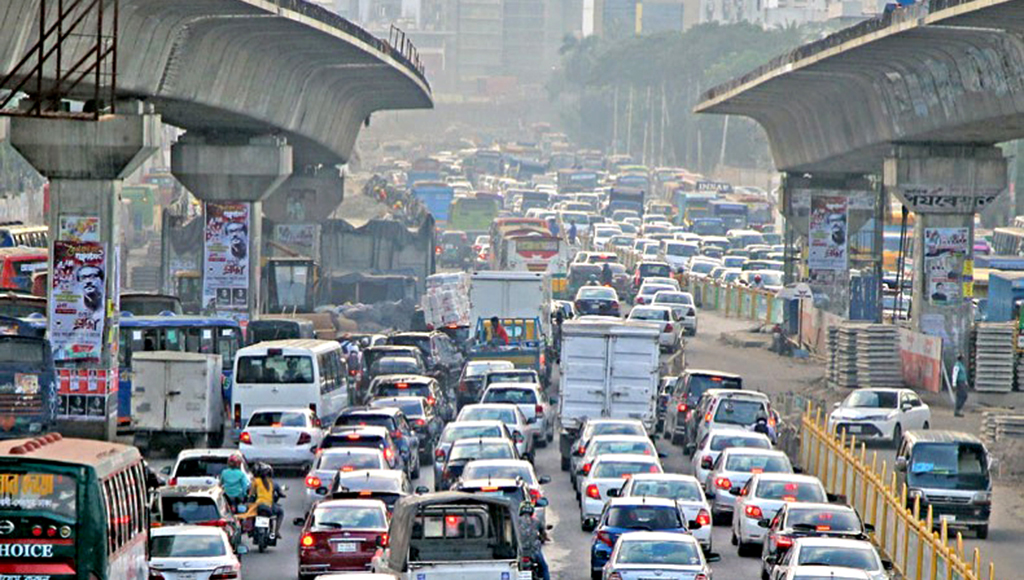
Bangladesh’s first Bus Rapid Transit (BRT) project was conceived as a faster way to travel between Gazipur and Dhaka’s airport. Fourteen years later, after Tk 2,811 crore in expenditure and years of construction-related disruption, the government is moving to dismantle key infrastructure and convert the corridor into a conventional six-lane highway.
The proposed closure of the approximately 20-kilometre project raises questions extending beyond its escalating costs and delayed completion: how did a mass-transit scheme reach the point where its infrastructure is being removed before passenger services began, and who should be held accountable for the failures?
The Cabinet, chaired by Prime Minister Tarique Rahman, approved the decision on October 18. The Road Transport and Highways Division subsequently outlined steps to implement it, including removing BRT stations and lane dividers, potentially widening two flyovers and transferring the functions of Dhaka Bus Rapid Transit Company to the Roads and Highways Department (RHD).
However, the project cannot be formally closed until outstanding legal issues are resolved in consultation with development partners.
Launched in 2012, the project was designed to provide dedicated lanes for special buses, enabling passengers to avoid ordinary traffic congestion and signals. It was expected to carry around 25,000 passengers a day, with construction initially scheduled for completion in 2016 and operations planned for 2017.
The original estimated cost was around Tk 2,040 crore. Three revisions later, it reached Tk 4,268.32 crore. By December 2024, when the approved project period expired, infrastructure work was reportedly 97 per cent complete, but overall physical progress stood at 77.48 per cent. No passenger service had been launched.
A subsequent proposal sought to increase the cost to Tk 6,598 crore and extend the deadline to 2029. The Executive Committee of the National Economic Council did not approve it, directing officials to explore alternatives and identify those responsible for design shortcomings.
The government’s latest decision effectively shifts the project’s focus from dedicated mass transit to road capacity. Yet expanding the highway does not, by itself, answer how the corridor’s growing passenger demand will be met through efficient public transport.
Transport experts have pointed to problems in planning, engineering and institutional coordination.
Professor Md Khasru Mia of the Civil Engineering Department at Dhaka University of Engineering and Technology (DUET) said operational or traffic-management problems should be addressed rather than automatically treated as reasons to abandon the project.
“If there are problems with the operating system, it should be changed. If there are complications in traffic management, effective plans should be adopted to resolve them,” he said.
One major design problem involved bus-door placement. Most buses operating in Bangladesh have doors on the left, while the BRT stations were designed for buses with doors on the right. This could have limited the use of specially configured buses outside the dedicated corridor.
The project also faced incomplete drainage planning, delays in relocating utility lines and inadequate traffic-management arrangements during construction. Responsibilities were divided among the RHD, Bridges Division and Local Government Engineering Department, creating coordination challenges.
Fifteen station structures were built along the corridor, but several remained incomplete. Some pedestrian bridges fitted with lifts and escalators were not fully operational. Lane dividers and construction barriers also reduced available road space, contributing to congestion and hardship for commuters.
Information provided on the project records seven deaths in accidents associated with construction, underlining the human cost of prolonged implementation.
The Bangladesh Institute of Planners (BIP) has strongly opposed the government’s move. Its general secretary, Professor Mu. Mosleh Uddin Hasan, described the decision as the worst of four alternatives considered: completing the project, introducing a franchise-based bus service, converting the corridor into an expressway or removing the BRT infrastructure.
BIP alleged that the decision favoured private-car users and construction-sector interests, and argued that it contradicted the Gazipur Transport Master Plan and Dhaka’s Revised Strategic Transport Plan. These are the organisation’s allegations and have not been independently established.
The organisation has urged the government to reconsider the decision, strengthen coordination among transport agencies and pursue integrated planning for mass transit in Dhaka and other major cities.
A Bangladesh University of Engineering and Technology (BUET) expert team led by Professor Shamsul Haque also reviewed the project. Its report, submitted to the Road Transport and Highways Division in October last year, identified systemic weaknesses in technical assessment, design, staffing, accountability and coordination.
The team recommended abandoning the BRT scheme and using existing infrastructure to improve the highway. Haque nevertheless stressed that alternative transport options were needed for commuters who had endured years of disruption. He suggested commuter train services between Gazipur and Kamalapur.
The financial implications may extend well beyond the Tk 2,811 crore already spent.
BIP has warned that dismantling stations, ramps and escalators, alongside potential compensation to contractors, could cost more than Tk 1,000 crore. The final amount will depend on the government’s implementation plan and outstanding contractual obligations.
The project received support from the Asian Development Bank, the French Development Agency and the Global Environment Facility, making the handling of legal and contractual issues important to its formal closure.
Gazipur Heritage and Development, which campaigned for the BRT service to be completed, has also opposed the decision. Its president, Md Shamsul Haque, said cancelling the project after most infrastructure work had been completed would be inappropriate. The organisation plans to submit a formal protest.
Road Transport and Highways Division Secretary Dr Mohammad Ziaul Haque could not be reached for comment despite attempts to contact him on Tuesday.
The government’s immediate challenge is to resolve contractual issues and convert the corridor into a conventional highway. But the larger test will be whether it can establish responsibility for the project’s failures, account transparently for the money spent and provide a credible transport alternative for commuters.
The BRT project’s fate highlights a central question for Bangladesh’s infrastructure planning: how can public investment deliver reliable services when design, coordination and accountability fall short—and how can similar failures be prevented in future projects?
What do you feel about this post?

Like

Love

Happy

Haha

Sad