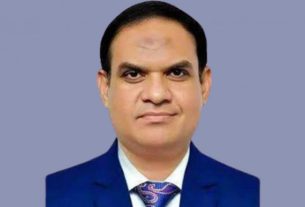

Tanvir Raihan:
The garment industry is one of Bangladesh’s major sources of export earnings. Yet its workers continue to face persistent challenges over wages, working conditions, job security and social protection. Workers frequently take to the streets demanding higher wages, while allegations of arrests, cases, repression and violence have also emerged during recent protests.
Why have wage disputes become a recurring feature of the industry? How much responsibility lies with the government and factory owners? And why has Bangladesh failed to ensure effective trade union representation for garment workers?
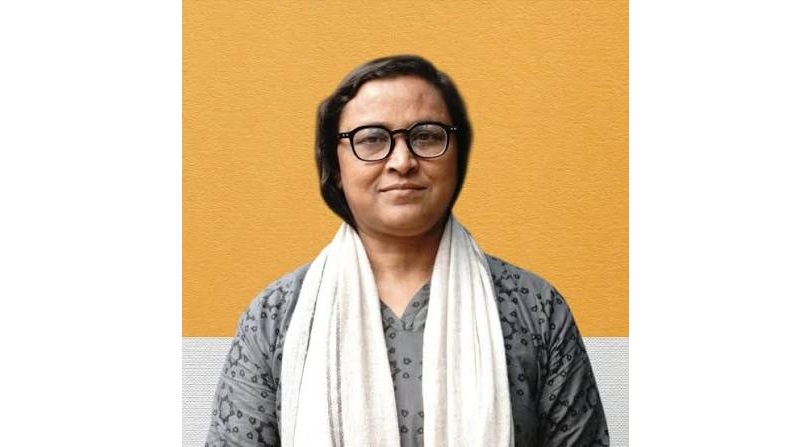
These issues were discussed with Jolly Talukder, a politician and prominent labour leader. She is a Presidium Member of the Communist Party of Bangladesh (CPB) and Vice-President of the Trade Union International Committee of the World Federation of Trade Unions. She has been actively involved in student politics and, subsequently, in the trade union movement among garment workers.
In an interview with Tanvir Raihan, Special Correspondent of CNSWORLD24News.com, she shared her views on the ongoing wage movement, workers’ rights and the challenges facing Bangladesh’s garment sector.
Question: Bangladesh’s garment industry is expanding and export earnings are growing. Yet workers’ living standards have not improved significantly. What explains this contradiction?
Jolly Talukder: This is a major question for us as well. The garment sector generates the country’s largest export earnings and plays a crucial role in sustaining the national economy. The state should therefore give the highest priority to improving the living standards of its workers. But in reality, workers have little security.
Many cannot afford even the nutritious food they need to maintain their health and continue working in factories. They struggle to educate their children and meet basic needs, including healthcare and social protection. Yet neither the government nor factory owners give adequate attention to workers’ living conditions. There is a lack of willingness to consider workers’ lives and interests beyond the pursuit of profit.
Question: Does this mean workers are not receiving a fair share of the economic benefits generated by the garment industry?
Jolly Talukder: Absolutely. Workers are not receiving a fair share of the industry’s economic success. Their labour is the driving force behind the growth of the garment sector. However, when wages are determined, factors such as market prices, living costs, children’s education and healthcare are not adequately considered.
For years, we have been demanding a national minimum wage of Tk30,000 for workers across all sectors. Through the Garment Workers Trade Union Centre, we have demanded a minimum monthly wage of Tk35,000 for garment workers, considering current market conditions. Some other workers’ organisations have demanded Tk32,000 or Tk37,000.
The amount is important, but what matters even more is ensuring wages that allow workers to maintain a decent standard of living.
Question: Wage disputes repeatedly turn into street protests. Why has it been so difficult to resolve these issues through negotiations?
Jolly Talukder: The main reason is that workers’ rights to organise and form trade unions have not been effectively ensured in Bangladesh. Although workers legally have the right to form trade unions, they face various obstacles from factory owners and the government when they try to exercise that right.
Since 1990, the trade union movement has been systematically weakened. If workers could organise independently, they would be able to negotiate regularly with employers over their demands. But that environment does not exist.
As a result, grievances accumulate over time and eventually erupt into spontaneous protests.
Workers cannot secure even a one-taka wage increase without taking to the streets. Whichever government comes to power, it gives greater priority to its own political and economic interests than to workers’ interests.
Question: Workers participated in the July 2024 mass uprising and expected meaningful changes afterwards. To what extent have those expectations been fulfilled?
Jolly Talukder: Workers participated in the July mass uprising and sacrificed their lives. They expected that their conditions would finally improve. Immediately after the uprising, there were assurances that wages would be reassessed. But the interim government did not give the matter the importance it deserved.
The current elected government first doubled the pay scale for government officials and employees. This has had an impact on the market. Prices of essential commodities have increased, as have electricity, gas and fuel costs.
Due to inflation, workers can no longer manage their households on their previous wages. Many workers have told us that their wages are insufficient even to cover seven or 15 days of expenses in a month.
The workers who played such an important role in the uprising and in the economy should have been considered before the new pay scale was announced.
Question: Does the government’s policy failure also contribute to workers’ growing frustration?
Jolly Talukder: Certainly. Immediately after the uprising, workers’ organisations urged the interim government to form a wage board. We raised the issue again before the current government announced the new pay scale. Yet the wage board was formed only in November.
Had the government formed the board five months earlier, workers might not have had to take to the streets today. If the government considers December a month of potential crisis, why did it allow the issue to drag on for so long?
The government has completely failed to initiate timely discussions on workers’ wages. The Home Minister, the police and the government themselves bear responsibility for the present situation.
Question: Is political consideration taking precedence over genuine workers’ interests in the selection of labour representatives for the wage board?
Jolly Talukder: Two worker representatives have been included in the board. One is a leader of the Jatiyatabadi Sramik Dal. The other represents an organisation that does not belong to the tradition of labour movements that developed in this region. It is more involved in NGO-type activities than in trade union organising.
There is room for debate over whether people capable of genuinely protecting workers’ interests have been appointed as representatives.
Anwar Hossain, president of the workers’ organisation, is a veteran labour leader. We respect him and hope he will play a constructive role. However, questions remain over whether representatives will be able to move beyond their respective political positions and fully represent workers’ interests.
Nevertheless, I believe the wage board must expedite its work. Workers are struggling to survive. The board should consult all garment workers’ organisations, including national federations.
Question: During the Awami League government, a leader of the ruling party’s labour wing was appointed as a workers’ representative on the wage board. The BNP government has now followed a similar approach. Why are independent workers’ representatives not being included?
Jolly Talukder: Whichever government comes to power—whether the Awami League, the interim government or the current BNP government—they essentially represent the interests of the wealthy classes.
That is why they prefer to appoint people aligned with their own political interests to the wage board. Factory owners also want representatives who will help ensure that wage decisions are made according to their preferences.
Genuine representatives of the labour movement are not given adequate space because they would raise workers’ actual demands and negotiate firmly with employers.
Unless this mindset changes among the government and factory owners, a lasting solution to wage disputes will remain elusive.
Question: Workers face the risk of arrest, legal cases and job losses when they join protests. Do international labour standards and Bangladesh’s labour laws provide adequate protection?
Jolly Talukder: Under ILO conventions and Bangladesh’s labour laws, workers have the right to collective bargaining. They also have the right to organise and protest for higher wages.
However, in the garment sector, the right to form trade unions and practise democratic trade unionism has not been properly ensured because of various obstacles created by factory owners and the government.
During the recent movement, leaders and activists of several workers’ organisations, including ours, were injured in attacks. Many workers have been arrested. We allege that several thousand workers have been implicated in cases involving unnamed accused persons.
Workers know that they may face pressure and repression if they take to the streets. Yet they are compelled to protest because their livelihoods are at stake.
The issue of workers’ safety is not limited to protests. Four workers lost their lives during the 2023 wage movement under the Sheikh Hasina government. Another four workers died during the interim government’s tenure.
This time, Taufiq Sheikh, a worker at Layla Garments who was participating in a protest in Bangla Bazar, Gazipur, was allegedly beaten to death by outsiders. These incidents require impartial investigations, the arrest of those responsible and proper judicial proceedings.
Question: The Home Minister has alleged that activists of a banned political party are instigating the workers’ movement. How do you respond?
Jolly Talukder: I want to ask the Home Minister directly: why did you form the wage board only in November? We had been demanding its formation since immediately after the mass uprising.
We have heard allegations of instigation and conspiracy for a long time. The Sheikh Hasina government used to make similar claims. At that time, it accused the BNP of conspiring to destroy the garment sector.
Instead of addressing workers’ genuine grievances, searching for conspiracies behind every protest will only make the situation more complicated. The government must first focus on workers’ legitimate demands and their deteriorating living conditions.
Question: Factory owners argue that repeated labour protests could drive international buyers to other countries, damaging Bangladesh’s garment industry. How valid is this argument?
Jolly Talukder: The Rana Plaza collapse itself resulted from the negligence of factory owners. Many workers lost their lives, yet even then, owners warned that orders would move to other countries.
They repeat the same argument whenever there is a wage movement. But international buyers have not abandoned Bangladesh.
One of the main reasons is that Bangladesh offers some of the lowest labour costs in the world. International brands and buyers are themselves major corporate capital owners. They will continue doing business wherever they can source garments at comparatively lower costs.
The issue is deeply connected to cheap labour.
We must recognise that putting pressure only on local factory owners is not enough. We need a trade union movement capable of holding international brands and buyers accountable as well.
Their contribution to workers’ wages and fair remuneration must be clearly established.
Question: Does this mean the labour movement should expand beyond factory owners and address the responsibilities of international supply chains?
Jolly Talukder: Absolutely. Profits from the garment industry are not generated by local factory owners alone. International brands and buyers are also major beneficiaries of this business. Yet they often try to avoid responsibility when it comes to workers’ wages and working conditions.
Our trade union movement must become more organised internationally. We must raise demands for fair wages, workplace safety and social protection before foreign brands and buyers as well.
An industry cannot remain sustainable in the long run if the entire pressure to reduce production costs is placed on workers.
Question: Why has there not been a sufficiently strong and united labour movement behind the demand for a minimum wage of Tk30,000 to Tk35,000?
Jolly Talukder: As I have said, the problem is rooted in a long-standing political and organisational crisis.
In Bangladesh, democratic rights are not properly practised. Since 1990, mafia networks and bourgeois political parties have captured trade union movements and organisations.
When we try to establish trade unions in factories, we face various obstacles. We have to struggle to secure union rights and even obtain registration. On the other hand, employer-backed or so-called pocket trade unions can obtain registration easily.
This has weakened genuine labour movements.
The more employers resort to obstruction and repression, the more spontaneous and fragmented workers’ protests become. There is no alternative to building an independent and democratic trade union movement if we want a lasting solution.
Question: Recent protests have escalated into violence and confrontation. What immediate steps should the government and factory owners take to resolve the deadlock?
Jolly Talukder: First, the display of force against workers by various security agencies and organisations affiliated with the ruling party must stop. Those who have been arrested should be released. Cases filed against workers on false charges must be withdrawn.
Second, the government must sit down with leaders of all national garment-sector federations and workers’ organisations. Area-based and factory-level labour leaders must also be included in the discussions.
Third, the wage board must begin its work without delay. The government must understand that workers urgently need higher wages.
The government’s position and the progress of negotiations should be communicated clearly to workers through the media and relevant organisations.
We want an acceptable solution through dialogue as quickly as possible. Wage decisions must reflect the actual cost of living and the financial realities faced by workers.
Question: Finally, what would be the key to achieving a lasting solution to the recurring labour unrest in Bangladesh’s garment sector?
Jolly Talukder: The first priority must be to ensure workers’ freedom to organise independently. Their rights to form trade unions, engage in democratic collective bargaining and secure genuine representation must be protected.
Wage determination must take into account not only employers’ capacity but also workers’ living costs, food, healthcare, education and social security.
International brands and buyers must also be held accountable for their responsibilities.
No industry can achieve long-term stability by ignoring workers’ demands or resorting to repression. Sustainable development in the garment sector is possible only when workers receive fair wages and their legitimate rights are protected.
Question: Thank you for your time.
Jolly Talukder: Thank you to CNSWORLD24News.com as well.
What do you feel about this post?

Like

Love

Happy

Haha

Sad