
Special Reporter:
Prime Minister Tarique Rahman has sought stronger Japanese investment and technological cooperation to accelerate Bangladesh’s infrastructure development, modernise its transport system and strengthen energy security, while proposing a joint ministerial commission to turn bilateral commitments into practical projects.
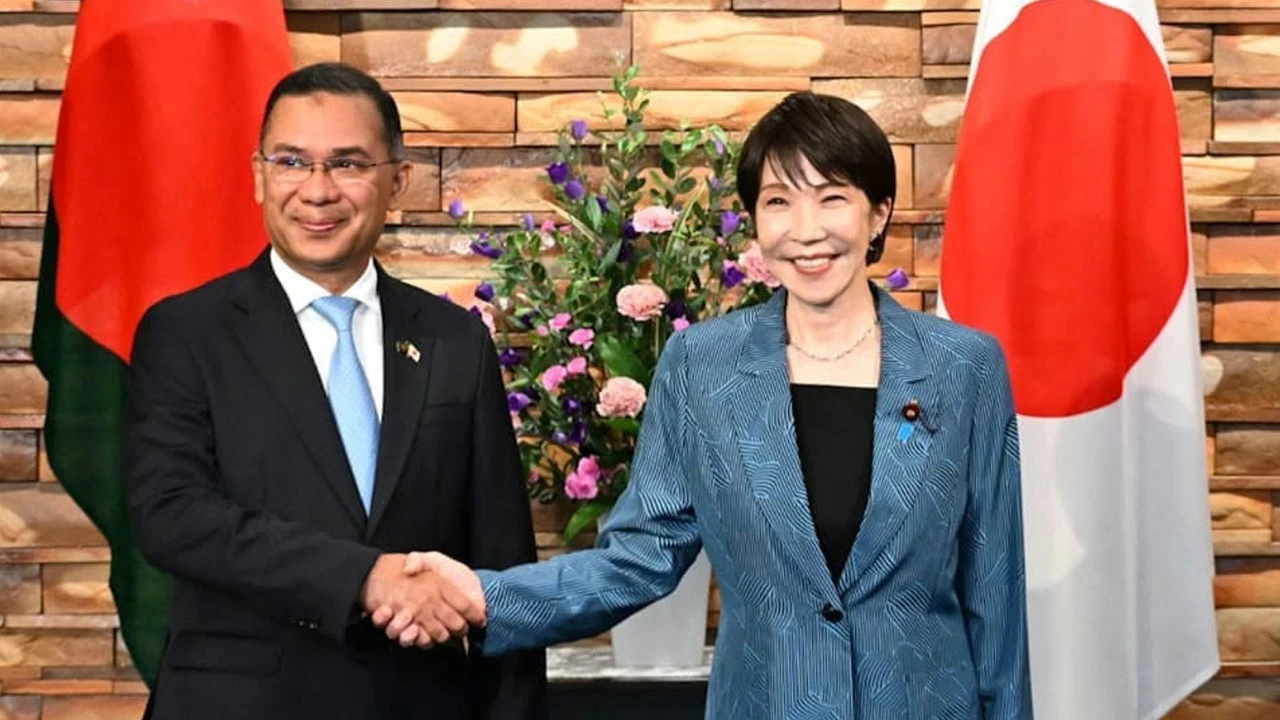
At a bilateral summit with Japanese Prime Minister Sanae Takaichi in Tokyo on Tuesday, Tarique also pressed for early implementation of the Bangladesh-Japan Economic Partnership Agreement (EPA), improved trade and investment conditions, and greater cooperation to address the Rohingya crisis and promote regional stability.
The discussions on the second day of his visit reflected Bangladesh’s interest in drawing on Japan’s experience in infrastructure, advanced transportation, energy and logistics to support its economic ambitions.
Welcoming Japanese investment, Tarique said his government was committed to making regulations, taxation, customs procedures and fund transfers more transparent, predictable and efficient. He stressed that a better business environment would be essential to attracting investment and expanding trade between the two countries.
He also called for stronger engagement between Bangladeshi and Japanese businesses, saying cooperation should produce tangible benefits for the people of both countries.
The Prime Minister’s programme included visits to two major Japanese facilities, offering opportunities to observe the country’s energy and logistics operations.
At 2:30pm local time, he visited JERA’s onshore liquefied natural gas (LNG) terminal and power plant in Futtsu, Chiba Prefecture. JERA is one of Japan’s leading energy companies.
Later, at 4:45pm, he toured a logistics hub operated by Nippon Express in Ichikawa city, also in Chiba Prefecture.
The visits came as Bangladesh seeks to strengthen its energy infrastructure and improve the efficiency of transport and logistics systems. However, no specific investment commitments arising from the visits were detailed in the information released about the programme.
Tarique was accompanied by senior ministers, advisers and officials, including Finance and Planning Minister Amir Khosru Mahmud Chowdhury, State Minister for Foreign Affairs Humayun Kabir, State Minister for Power, Energy and Mineral Resources Anindya Islam Amit, Bangladesh Investment Development Authority Chairman Ashik Chowdhury and Bangladesh Bank Governor Md Mostakur Rahman.
Beyond economic cooperation, Tarique called for a lasting resolution to the Rohingya crisis, expressing concern over the deteriorating situation in Myanmar.
He urged an end to violence, unrestricted humanitarian assistance and dialogue among the parties concerned. He also called on Japan to remain engaged with relevant stakeholders to help restore peace and stability in Myanmar’s Rakhine State.
Thanking Tokyo for its support for Bangladesh’s humanitarian efforts to shelter Rohingyas forcibly displaced from Myanmar, he stressed that their return must be early, safe, voluntary and dignified.
The Prime Minister also reiterated Bangladesh and Japan’s shared commitment to a free, open, peaceful and inclusive Indo-Pacific, alongside greater regional connectivity, trade and economic growth.
He reaffirmed support for multilateralism, international law and global peace, while thanking Japan for backing Bangladesh Foreign Minister Dr Khalilur Rahman’s election as president of the 81st session of the United Nations General Assembly.
Describing the summit as the beginning of a new chapter in bilateral relations, Tarique proposed forming a joint ministerial commission to identify priority areas, accelerate decisions and translate commitments into concrete initiatives. He also invited Takaichi to visit Bangladesh.
Separately, Prime Minister’s wife and physician Dr Zubaida Rahman called for expanded Japanese cooperation in healthcare services, medical research, maternal and child health, and modern medical infrastructure in Bangladesh.
Speaking at a health seminar organised by the Sasakawa Peace Foundation in Tokyo on Tuesday, she identified healthcare, education and social protection as key government priorities.
She outlined initiatives to make healthcare more affordable, improve public health services, recruit healthcare workers and expand access to education and medical services for disadvantaged communities. She also highlighted employment-oriented education, support for underprivileged students and family-based assistance programmes, including Family Cards.
Drawing on her professional experience as a physician, Zubaida said Bangladesh had significant potential to strengthen health policy, expand research and establish modern medical institutions. She emphasised that Bangladesh and Japan could respond to emerging health and social challenges by sharing expertise and resources.
She also underscored the importance of sustainable social systems, strong economies, quality education and protection from poverty and violence in ensuring children’s well-being.
Recognising the contributions of nongovernmental organisations, international institutions and philanthropic foundations to maternal and child health, she urged the Sasakawa Peace Foundation to expand its programmes and support for vulnerable communities in Bangladesh.
She assured the foundation of the government’s cooperation in initiatives aimed at improving public health and ensuring sustainable healthcare services. Yohei Sasakawa, honorary chairman of the Nippon Foundation and the Sasakawa Peace Foundation, attended the seminar.
The bilateral summit began at 11:45am at the Japanese Prime Minister’s Office, known as the Kantei, following a formal welcome ceremony and guard of honour. The two leaders later delivered joint statements and attended a banquet hosted in honour of the visiting Bangladeshi Prime Minister.
What do you feel about this post?

Like

Love

Happy

Haha

Sad