International Desk:
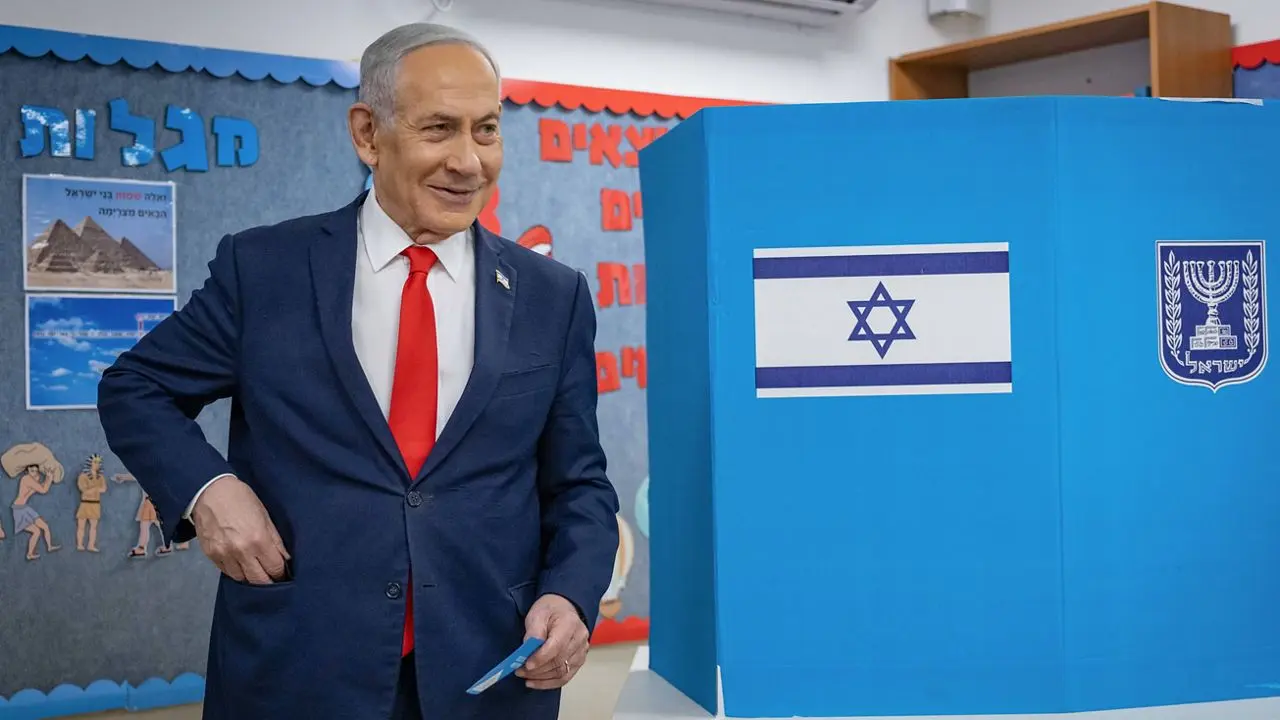
Israeli Prime Minister Benjamin Netanyahu’s Likud Party is facing the prospect of losing ground in the parliamentary election as Arab Israeli voters turn out in significant numbers, according to a report by Al Jazeera.
With polling nearing its scheduled close, Netanyahu has urged his supporters to turn out and vote in the final hours. Arab Israelis, also referred to as Palestinian citizens of Israel, account for around 20 per cent of the country’s population and could play an important role in determining the election outcome.
Israel elects members of the Knesset, its parliament, through a proportional representation system, under which parties receive seats broadly in proportion to their share of the vote.
However, a weaker electoral performance would not necessarily prevent Netanyahu from remaining prime minister. Several possible political scenarios could emerge after the results are announced.
Even if Likud wins fewer seats, Netanyahu could attempt to form a governing coalition with his existing allies or smaller parties. Securing the support of at least 61 members in the 120-seat Knesset would give a coalition a parliamentary majority.
Alternatively, a rival bloc led by Gadi Eisenkot could seek to form a government if it secures sufficient seats and support from other parties.
The Arab party Ra’am could play a significant role in such negotiations, as it did in 2021 when it supported a coalition government that ended Netanyahu’s uninterrupted tenure as prime minister at the time.
Another possibility is a national unity government involving Netanyahu and his principal rival, Eisenkot. Such an arrangement could bring together major political rivals and potentially include representatives from other parties. The report said the United States had been encouraging Israel to consider this option.
A further possibility is a minority government if no political bloc can secure a parliamentary majority. Smaller parties could negotiate an arrangement to form a government that would depend on support from other lawmakers to remain in power.
The final outcome will depend on the distribution of seats in the Knesset and the ability of political leaders to secure sufficient parliamentary support.
What do you feel about this post?

Like

Love

Happy

Haha

Sad