
Tanvir Raihan:
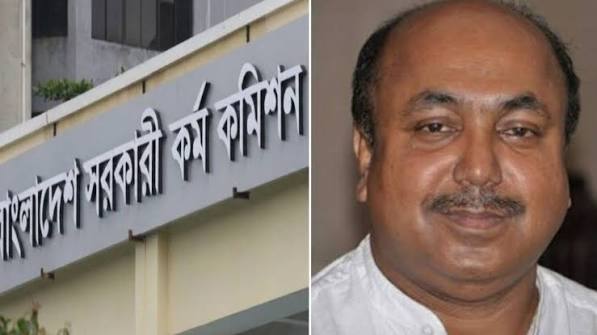
Professor Dr Mobassher Monem has stepped down as chairman of the Bangladesh Public Service Commission (PSC) less than two years after being appointed for a five-year term, triggering questions about the circumstances surrounding his sudden departure.
Monem submitted his resignation to the Ministry of Public Administration on Tuesday, citing health problems. However, his return to the Department of Public Administration at the University of Dhaka the following day has prompted further discussion about the reasons behind his decision.
Monem said prolonged work pressure, age-related difficulties, diabetes and other health complications had prompted him to leave the post. He also wanted to return to his teaching career at the university. He denied that political pressure had played any role in his resignation.
Yet questions remain over the timing of his departure, particularly because his tenure had been marked by several initiatives aimed at clearing recruitment backlogs, shortening the Bangladesh Civil Service (BCS) examination cycle and improving transparency in public-sector recruitment.
While speculation has emerged over possible administrative disagreements or political considerations, no independently verified evidence has established that such factors contributed to his resignation.
One of the most prominent initiatives under Monem’s leadership was the “One BCS, One Year” plan, which aimed to complete the entire recruitment process, from publication of an examination circular to announcement of final results—within 12 months.
During his tenure, the commission announced final results for the 44th, 45th, 46th, 48th and 49th BCS examinations, recommending 7,651 candidates for recruitment, according to the information provided. Efforts were also made to expedite the 47th and 50th BCS examinations, with the commission setting a one-year completion target for the 50th BCS.
The commission also initiated changes to the traditional examination system. These included introducing a revised approach to evaluating written examination scripts, moving towards competency-based viva voce assessments, revising question-setting methods and reducing dependence on coaching centres.
Other initiatives included plans to establish an in-house digital press to strengthen examination security, digitise and automate examination-related activities, and reduce delays in evaluating scripts. The commission also reduced the BCS application fee from Tk 700 to Tk 200.
The reforms were intended to make recruitment more efficient, accessible and transparent.
The issue of greater autonomy for the PSC also came into focus during Monem’s tenure. According to sources familiar with the matter, letters were sent to the Ministry of Public Administration regarding the commission’s autonomy.
This has fuelled speculation about possible differences between the commission and the administration. However, the nature of any such disagreement, if one existed, has not been independently established.
Some PSC officials have also raised questions about how the chairman’s working relationship with the new government evolved after his appointment under the interim administration.
There is further speculation that efforts to curb question leaks, recruitment-related irregularities and undue influence may have caused discomfort among vested interests. Another unverified possibility is that Monem received signals that the government no longer wanted him to continue as chairman.
None of these suggestions has been substantiated by publicly verified evidence, and they should not be treated as established explanations for his resignation.
Emeritus Professor Monzur Ahmed said the resignation of the head of a constitutional institution before the end of his term naturally raises questions.
He observed that although the government had spoken about reforms in various sectors, visible changes remained limited. The PSC, he said, plays a crucial role in recruiting competent and skilled personnel for government service, making stability and accountability in its leadership particularly important.
Monzur Ahmed also expressed concern that the government might appoint someone of its own preference or political leaning to the position. His comments reflected a concern about the potential direction of the appointment rather than evidence of a specific government plan.
A PSC member, speaking on condition of anonymity, said Monem had interacted with members normally and attended a meeting the day before announcing his resignation.
The member said the chairman called them together on Tuesday and informed them of his decision, but did not explain the reasons.
“Chairman Sir spoke with us normally and held a meeting the day before his resignation. On Tuesday, he suddenly called us and said he would resign. We do not know why or for what reason,” the member said.
Monem’s departure has raised questions about the future of the reforms initiated during his tenure, including efforts to shorten BCS recruitment timelines, clear examination backlogs and strengthen transparency.
The extent to which these initiatives will continue under the commission’s next leadership remains uncertain.
For now, Monem’s stated reasons for resigning are health concerns and his desire to return to teaching. Speculation about administrative disagreements, political pressure or resistance to reforms remains unverified. A clearer understanding of the circumstances will require further information from the Ministry of Public Administration, relevant official records and the commission itself.
What do you feel about this post?

Like

Love

Happy

Haha

Sad