
International Desk:
Bangladesh is struggling to contain what has been described as the world’s largest measles outbreak, with gaps in vaccination coverage, weaknesses in health data and inadequate public awareness complicating efforts to control the highly contagious disease.
Health experts say the country’s experience serves as a major warning to other nations about the consequences of declining vaccination rates and gaps in routine immunisation.
According to the World Health Organization (WHO), Bangladesh recorded 202,000 suspected measles cases between the outbreak’s onset in mid-March and October 9. Laboratory tests confirmed 22,000 cases, giving the country the highest number of suspected infections worldwide this year. Source: Reuters
The WHO reported 1,147 deaths linked to the outbreak, with children under five accounting for 94 per cent of the fatalities.
The outbreak highlights the importance of maintaining vaccination coverage at or above 95 per cent, the level the WHO considers necessary to prevent widespread measles transmission. Bangladesh had previously come close to that target, but its vaccination rates declined in 2025.
A Reuters investigation, based on WHO documents and interviews with more than a dozen scientists, health workers and officials, found that the emergency response faced several obstacles. These included gaps in records of eligible children, insufficient preparation and difficulties reaching parents in vulnerable communities.
“This is a big warning to every country,” said Mark Jit, a professor at New York University’s School of Global Public Health and a vaccine adviser to the WHO.
Preventing an outbreak through vaccination, he said, is easier, cheaper and safer than responding after infections spread.
Ultimately, the outbreak can be brought under control, Jit said, but many people may become infected and some will die before that happens.
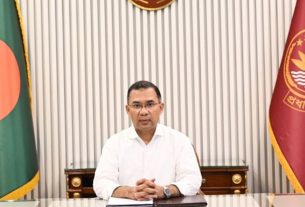
Ziauddin Haider, health affairs special assistant to Prime Minister Tarique Rahman, told Reuters in September that the government was making every effort to stop the outbreak. The government did not respond to additional questions sent by Reuters in October for its report.
Sylhet, in northeastern Bangladesh, has been among the worst-affected areas in the country of 178 million people.
In July, two-year-old Arman Hossain died of measles within 24 hours of being admitted to hospital. His family sold its three-wheeled auto-rickshaw to pay for his treatment. His four-year-old sister, who had also not been vaccinated, survived.
Arman’s father, 26-year-old Amin Mia, said health workers had not visited their remote village in time to vaccinate children.
“They came only after we had buried our son,” he said.
The WHO estimates that measles kills two to three people for every 1,000 infections under typical circumstances. The disease can be more deadly in poorer countries, where factors such as malnutrition increase the risk of severe complications.
A similar tragedy occurred in Chhatak, also in the Sylhet region. Labiba Akter, the nine-month-old daughter of carpenter Humayun Rashid, died of measles in June. She had not received a vaccine.
In April, the emergency vaccination programme lowered the eligible age from nine months to six months, meaning Labiba could have been vaccinated under the revised policy.
Her father said no health worker had visited to inform the family.
In May, Health Minister Sardar Md Sakhawat Hossain said the emergency campaign had reduced infections in hotspots to nearly zero and brought the outbreak under control.
But the situation subsequently deteriorated. In September, Bangladesh reportedly recorded an average of 1,198 new measles infections a day, the highest daily figure since May.
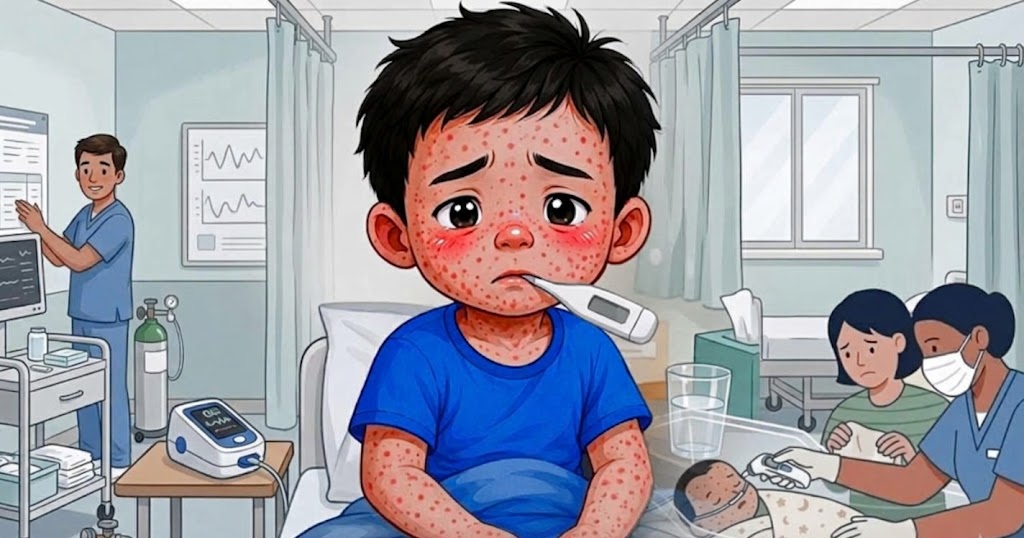
Measles typically causes a high fever, cough and a characteristic skin rash.
Until recently, Bangladesh was considered a success story in immunisation.
WHO and UNICEF estimates show that 96 per cent of children received the first dose of the measles vaccine in 2024, while 93 per cent received the second. The second dose is essential because a small proportion of children do not develop sufficient immunity after the first.
However, vaccination coverage declined amid political upheaval and disruptions to healthcare services following the end of Sheikh Hasina’s 15-year rule in 2024.
Health workers went on strike, vaccine procurement orders were delayed, and follow-up activities under routine immunisation programmes were disrupted.
A report published by the WHO and UNICEF in July found that first-dose coverage fell to 90 per cent in 2025, while second-dose coverage dropped to 86 per cent.
Both figures were below the 95 per cent threshold recommended to prevent outbreaks.
The agencies also raised concerns about the quality of government vaccination data between 2023 and 2025. In some instances, reported coverage exceeded 100 per cent of the target population, suggesting possible errors in dose counts or estimates of eligible children.
Bangladesh moved quickly after the outbreak began, and the number of new infections initially declined following an emergency vaccination campaign in April and May that reached nearly 20 million children.
The government said all eligible children aged six months to five years had been covered. However, subsequent data indicated that the campaign had fallen short of its target.
A separate routine health programme conducted in June included 4 million more children in the same age group than the emergency measles campaign had accounted for.
“There is a gap,” Haider told Reuters on September 14, as infections were rising again.
He cited possible parental reluctance and children being too ill to attend vaccination sessions. Questions were also raised about the campaign’s preparation and implementation.
Reuters reviewed previously unpublished minutes from meetings involving the government, the WHO and other health partners in April and August.
The documents indicated that preparations had been rushed. Minutes from an April 19 meeting showed that, because of time constraints, officials conducted only one of the four usual rounds of readiness assessments before launching the emergency campaign.
These assessments are designed to determine whether districts have adequate cold-chain equipment for vaccine storage, accurate estimates of eligible children and other essential resources.
The single assessment found that most districts were prepared, but some were not.
Mahmudur Rahman, an epidemiologist and chair of Bangladesh’s National Verification Committee for Measles and Rubella Elimination, said inadequate preparation often leaves children in the poorest and most remote communities without vaccination.
These children ultimately bear the greatest burden, he said.
Haider said the April campaign was launched within four weeks. But Tajul Islam Abdul Bari, who led Bangladesh’s immunisation programme until 2017, said such campaigns normally require several months of planning.
Minutes from an August meeting also highlighted continuing gaps in coverage. Among laboratory-confirmed measles cases, the proportion of children who had not been vaccinated increased from 82 per cent before the campaign to 85 per cent afterwards.
The figures suggested that vaccination gaps remained a serious problem despite the emergency drive.
The WHO did not respond to Reuters’ questions about the April and August meetings. However, its representative in Bangladesh, Dr Rajesh Narwal, said the organisation remained committed to supporting the government in reaching every child at risk.
He stressed the need to strengthen routine immunisation to prevent similar gaps from recurring.
Official records show that 180 children have died of measles in Sylhet. In September, eight of 16 families interviewed by Reuters said they had not seen health workers visit their areas to administer vaccines. At least six families said health workers arrived only after a child had died of measles in their community.
In late September, the government launched another campaign targeting 3.4 million previously missed children.
“We will involve everyone at the village level to ensure that no child is left behind,” the health minister said at a news conference.
Ensuring that every eligible child receives a vaccine remains difficult. According to UNICEF and the Bangladesh Bureau of Statistics, as many as 40 per cent of children in the country are not registered at birth.
Government data also indicate that roughly one-third of health worker positions remain vacant.
Health experts are calling for vaccination to be extended to children older than five, who account for about one-third of measles cases, according to the WHO.
Bangladeshi scientists are also investigating why immunity appears to decline earlier than expected in infants as young as six months. Normally, babies receive antibodies from their mothers that offer some protection against infections during early infancy.
The WHO has also emphasised the importance of ensuring timely treatment for infected children.
This presents another challenge for Bangladesh, which is simultaneously battling dengue outbreaks.
In September, Shahid Shamsuddin Ahmed Hospital, a 100-bed facility in Sylhet treating measles patients, struggled to accommodate the influx of patients across its wards. Reuters reporters counted 178 patients admitted on the day they visited.
Bangladesh’s experience underscores how declining immunisation coverage, weaknesses in health systems and failures to reach vulnerable communities can allow a preventable disease to spread rapidly, even in a country with a strong record of vaccination success.
What do you feel about this post?

Like

Love

Happy

Haha

Sad