

Tanvir Ahmed:
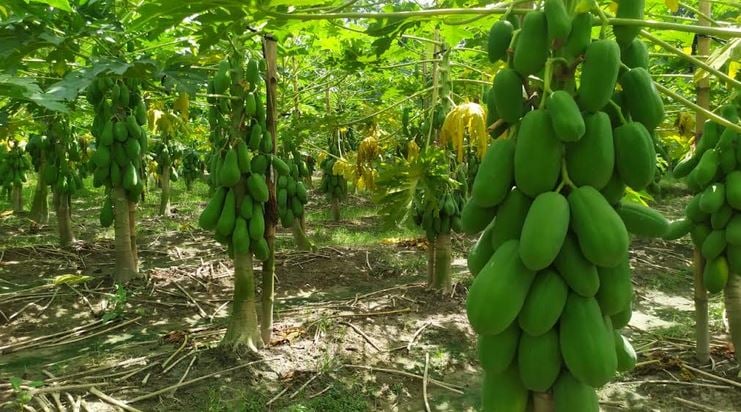
Papaya prices have plunged sharply in Dhaka’s wholesale markets, with green papayas selling for as little as Tk 4–5 per kilogram over the past week. While the steep decline has brought relief to low-income consumers struggling with high vegetable prices, farmers, wholesalers and traders are facing mounting losses.
Traders attribute the price collapse to a surge in supply following increased cultivation and higher-than-expected yields. Many had invested heavily in advance payments to farmers, hoping to repeat last year’s profits, when retail papaya prices reportedly reached Tk 80–100 per kilogram.
Karwan Bazar, one of Dhaka’s major wholesale vegetable markets, receives papayas mainly from Chuadanga, Jashore, Manikganj, Faridpur and Rajshahi. Traders say production has increased across several growing areas, flooding the market and pushing prices below production and transportation costs.
Sher Ali Pathan, who has been trading papayas at Karwan Bazar for 47 years, said he had advanced Tk 3 crore to farmers across five districts in anticipation of strong demand and higher prices.
“Over the past few days, I sold papayas for Tk 6–7 per kilogram. Last Monday, the price fell to Tk 4. But transportation alone costs more than Tk 4 per kilogram to bring papayas from Chuadanga and Jashore to Dhaka,” he said.
“I doubt whether I will recover even Tk 50 lakh of the Tk 3 crore I invested. I do not know how I will repay my bank loans and interest,” he added.
The losses are equally severe for growers and smaller traders. Rafiqul Islam, who brought three tonnes of papayas from Singair in Manikganj to Karwan Bazar, said production costs—including land rent, seeds, fertilisers and cultivation—amounted to Tk 10–12 per kilogram. Transportation and labour added another Tk 3.
This puts the total cost at around Tk 13–15 per kilogram before accounting for other possible expenses.
“I had to sell the papayas for Tk 6–8 per kilogram, losing more than half my investment on every kilogram,” he said.
The price slump has provided some relief to low-income households and small eateries, which are struggling with the high cost of essential food items.
A visit to several markets in the capital found many vegetables selling for Tk 50–100 per kilogram, while prices of beans, tomatoes and carrots ranged from Tk 150 to Tk 220. Against this backdrop, papaya has emerged as one of the cheapest vegetables available.
Amir Hossain, who runs a small hotel in Shewrapara, said rising LPG prices had increased his cooking expenses. To keep meal prices affordable, he has reduced his use of more expensive vegetables and switched to green papaya and potatoes.
“I used to buy around five kilograms of papaya a day. Now I buy about 20 kilograms and use it to prepare vegetable dishes that we sell for Tk 20,” he said.
Rahima Begum, who supplies meals to a 30-member mess in the West Rajabazar area, said the high prices of fish, meat, cooking oil and lentils had forced her to change her daily menu.
“Papaya, bottle gourd and potatoes are among the few relatively cheap items in the market. So I have increased the use of papaya in our daily meals,” she said.
Mosharaf Hossain, a vegetable seller who has been working at Karwan Bazar for 45 years, said he had never witnessed such a steep fall in papaya prices during his career.
Agriculture officials said higher cultivation and improved yields had contributed to the increase in supply.
Mohammad Hazrat Ali, director of the Horticulture Wing at the Department of Agricultural Extension, said both the area under papaya cultivation and overall production had increased this year.
He said the cultivation of high-yielding hybrid varieties had expanded in several districts, resulting in greater production and increased market supply.
The resulting glut has driven prices down sharply, leaving producers and traders struggling to recover their costs even as consumers benefit from cheaper food.
The situation highlights the vulnerability of perishable agricultural commodities to sudden supply surges, particularly when production increases without a corresponding expansion in demand or adequate storage and marketing facilities.
What do you feel about this post?

Like

Love

Happy

Haha

Sad