

Chattogram Reporter:
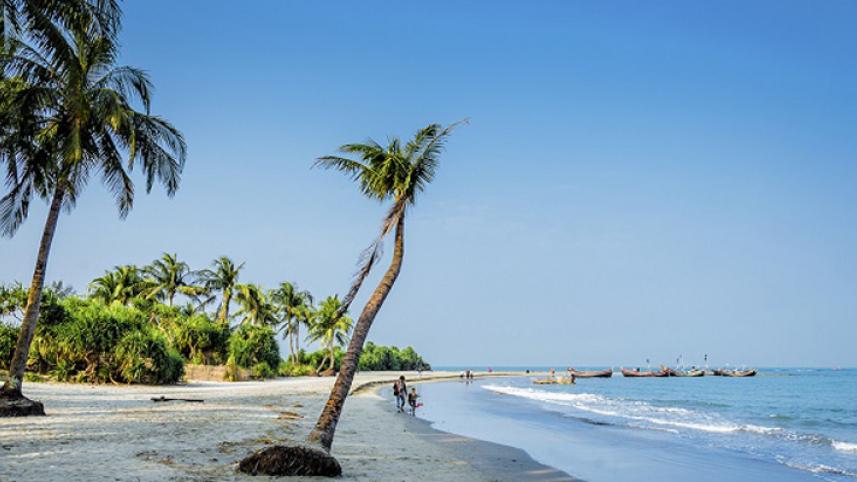
Saint Martin’s, the country’s only coral island, is reopening to tourists today. Although the lifting of the overnight stay ban has expanded travel opportunities, high transportation costs and difficult journeys continue to pose challenges for visitors. The closure of the convenient Naf River route due to the conflict in Myanmar has forced tourists to use longer alternative routes, including the route from Nuniachhara Ghat in Cox’s Bazar.
As a result, ship fares have more than doubled in recent years. Combined with lengthy sea journeys, accommodation costs and other expenses, a trip to Saint Martin’s is increasingly becoming a luxury for ordinary tourists, according to tourism industry stakeholders.
People familiar with the matter said the journey to the island takes around two hours from Sabrang, two and a half hours from Teknaf and four to four and a half hours from Inani. In contrast, the journey from Nuniachhara Ghat in Cox’s Bazar takes seven to eight hours and can sometimes extend to nine or 10 hours.
Tourists travelling from Dhaka therefore need at least three days to complete the round trip and spend one night on the island.
Travel costs have also risen significantly. In 2023, the round-trip fare for a general-class passenger travelling from Teknaf to Saint Martin’s ranged from Tk 1,000 to Tk 1,500. When ship services from Nuniachhara Ghat began in December 2024, the minimum fare was Tk 1,800. It has since doubled to Tk 3,600.
Ship operators attribute the fare increases to rising fuel prices, workers’ wages and vessel maintenance costs.
Asaf-ud-Doula Ashek, former general secretary of the Tour Operators Association of Cox’s Bazar (TOAC), said, “The current fares for ships operating to Saint Martin’s are certainly high. However, fuel prices have almost doubled. Operating expenses, including workers’ wages, have also increased due to inflation. Seagoing vessels can operate for only two to two and a half months a year. During the rest of the year, operators still have to bear staff salaries and vessel maintenance costs. Fares may come down through competition if more ships are introduced on the route.”
Although alternative waterways could help reduce travel time, a lack of necessary infrastructure has prevented their effective use.
Shah Porir Dwip lacks jetties suitable for large vessels and sufficient navigability. The necessary jetty infrastructure has also not been completed at Sabrang. Meanwhile, ship operations from the Navy jetty at Inani were suspended after adverse weather damaged its pontoon.
Nayan Shil, acting officer of the Cox’s Bazar River Port under the Bangladesh Inland Water Transport Authority (BIWTA), said, “The local administration determines fares for tourist vessels. BIWTA issues route permits and authorisations for vessel operations. The authority has no role in setting fares on the Cox’s Bazar-Saint Martin’s route.”
In addition to ship fares, tourists have to pay several other charges, including a five per cent sales commission, an Ecologically Critical Area (ECA) fee of Tk 100 per person, jetty tolls and beach management fees.
A tourist travelling from Dhaka to Saint Martin’s via Cox’s Bazar by non-air-conditioned bus needs to spend at least Tk 11,000 to Tk 12,000 for the trip. The total cost rises further when food and personal expenses are included.
Policy uncertainty in the tourism sector has emerged as another obstacle to investment. Changes in government decisions from year to year regarding tourist access, daily visitor limits and overnight stays have made it difficult for entrepreneurs to plan long-term investments.
Tofail Ahmed, former president of TOAC, said, “Over the past few years, various experimental decisions by the government have caused losses for tourism entrepreneurs operating on Saint Martin’s. We have demanded an increase in the daily tourist limit and permission for overnight stays from November to March.”
Industry stakeholders expect fares to decline if additional vessels join the route this season. Initiatives have been taken to introduce MV Malancha and a vessel operated by Green Line.
However, they say reducing dependence on lengthy sea routes, developing alternative terminals, introducing a coordinated fare-setting policy and ensuring consistency in tourism regulations will be essential to lowering travel costs and making the island more accessible to visitors.
What do you feel about this post?

Like

Love

Happy

Haha

Sad