

International Desk:
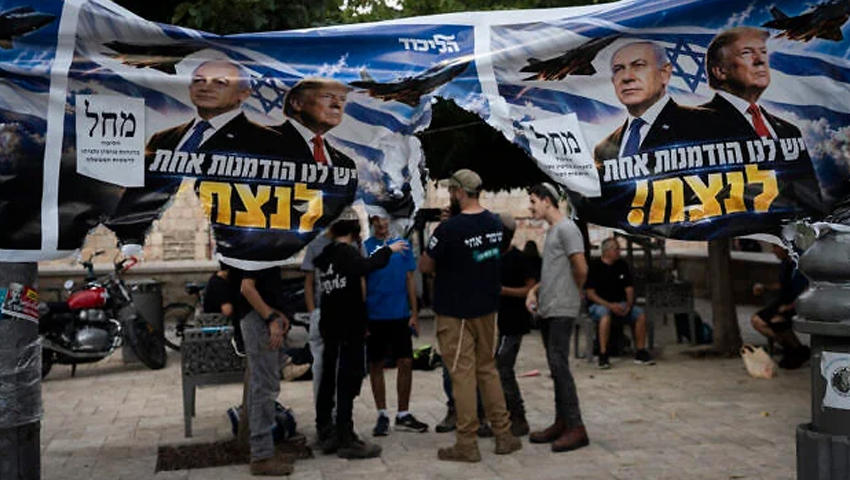
Israel’s Prime Minister Benjamin Netanyahu’s bloc was leading in the country’s parliamentary election, with 53 seats projected after 89.8 per cent of the votes had been counted. However, neither Netanyahu’s alliance nor the opposition bloc led by Gadi Eisenkot secured the 61 seats required to form a parliamentary majority.
The Arab-led parties, meanwhile, were projected to win a combined 19 seats, a record for the country, potentially giving them a pivotal role in negotiations over the formation of the next government.
The Times of Israel reported the figures on Wednesday, citing data released by Israel’s Central Elections Committee.
The results marked a shift from most pre-election opinion polls, which had generally placed Eisenkot’s bloc ahead of Netanyahu’s alliance. Exit polls released after voting ended had also indicated a narrow lead for the opposition. However, the balance changed as the official vote count progressed.
Netanyahu’s Likud party was projected to win 26 seats, making it the largest individual party, while Eisenkot’s Yashar party was expected to secure 21 seats.
Naftali Bennett’s B’Yachad and the Arab-led Joint List were each projected to win 12 seats. The left-wing Democrats were expected to secure eight seats.
The far-right Otzma Yehudit, the ultra-Orthodox Shas and United Torah Judaism parties, the Arab-led Ra’am party, and Avigdor Liberman’s Yisrael Beytenu were each projected to win seven seats. Finance Minister Bezalel Smotrich’s Religious Zionism party was expected to secure six.
Netanyahu’s bloc comprises Likud, Shas, United Torah Judaism, Otzma Yehudit and Religious Zionism. Together, the parties were projected to hold 53 seats, down from their current combined strength of 68 in the outgoing Knesset.
Eisenkot’s bloc, comprising Yashar, B’Yachad, the Democrats and Yisrael Beytenu, was projected to secure 48 seats, leaving it 13 short of a majority.
The Joint List, led by Yousef Jabareen, and Ra’am, led by Mansour Abbas, were expected to win 19 seats combined. Their projected gains could give them considerable influence over the coalition-building process.
However, the opposition’s path to a majority remains complicated because several parties in Eisenkot’s bloc have expressed reservations about forming an alliance with the Arab-led parties. Their positions could make it difficult to assemble a government even if the opposition secures their support.
The Central Elections Committee said between 430,000 and 480,000 special ballots remained to be counted at the time of the report. These included votes cast by soldiers, prisoners, diplomats serving abroad and people unable to vote at their designated polling stations.
The counting of these ballots could affect the distribution of seats among individual parties, although the overall balance between the main political blocs remained uncertain.
The final official results were expected to be published on November 4, according to the report.
With neither major bloc reaching the 61-seat threshold, negotiations and possible alliances are expected to determine who can form Israel’s next government.
Source: The Times of Israel
What do you feel about this post?

Like

Love

Happy

Haha

Sad