Special Correspondent:
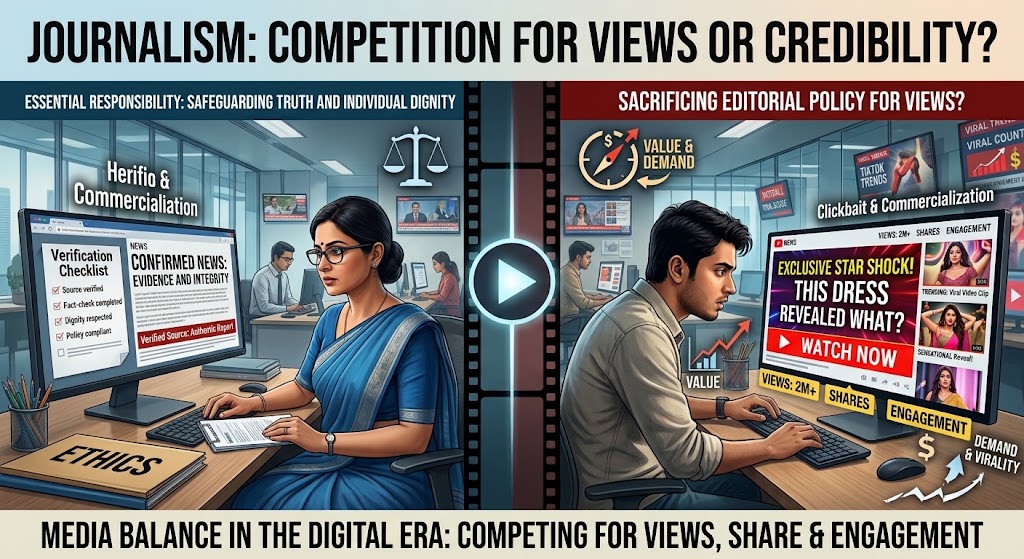
Keeping audiences engaged has become a major challenge for digital news outlets. In the competition for views, shares and engagement on social media platforms such as Facebook and YouTube, news organisations are increasingly turning to video-based content. However, questions are being raised over the news value of content that focuses on celebrities’ revealing outfits, private moments and physical appearance.
Some entertainment videos and photographs published on the social media accounts of leading media outlets have drawn criticism from a section of users. They allege that certain content places greater emphasis on celebrities’ clothing, physical features and personal appearances than on their professional work, statements or developments in the entertainment industry. This has raised concerns about whether some outlets are prioritising immediate audience curiosity over meaningful news coverage.
Some social media users have criticised the way online and multimedia content is presented by various media organisations. Several media professionals, speaking on condition of anonymity, said the online and multimedia divisions of some outlets were facing questions over the competence, skills and experience of the people responsible for producing such content. They questioned who had authorised the publication of certain videos and suggested that a lack of accountability could be a contributing factor.
They also stressed the need for media organisations to uphold editorial standards through professional conduct, transparency, integrity and accountability.
Entertainment reporting has long covered actors’ clothing, styling, personal lives and public appearances. However, the way these subjects are presented matters. The camera’s focus, the choice of headlines and the editing of footage can all influence how audiences perceive a story and which aspects of a person’s appearance receive attention.
Critics of some videos circulated on social media allege that footage showing a model or TikTok creator engaged in everyday activities, such as eating, sometimes gives unnecessary prominence to the person’s body or clothing. They argue that when an individual’s ordinary activities are filmed and edited primarily to highlight physical appearance, the content risks moving beyond entertainment reporting into body-focused promotion.
However, determining whether a video is inappropriate or unethical requires consideration of the complete footage, the context in which it was produced, its editorial purpose and the consent of the person featured. A video’s popularity or high view count alone does not establish that it was published for a particular commercial purpose.
Social media has become one of the most important channels through which online news organisations reach their audiences. View counts, shares and audience reactions can significantly increase the reach of a video. As a result, outlets naturally have incentives to produce short videos, attention-grabbing headlines and content designed to attract viewers quickly.
Yet when the pursuit of views takes precedence over news value, factual accuracy and respect for individual dignity, media credibility can suffer. This concern is particularly significant for established news organisations, whose audiences expect not only entertainment but also reliable information and responsible presentation.
If a video’s headline or thumbnail emphasises a person’s physical features rather than the substance of the story, it may create misleading expectations among viewers. Similarly, a mismatch between a headline and the actual content can undermine audience trust. Assessing these concerns requires an evidence-based examination of the content itself, its promotional strategy and audience responses.
Questions have also emerged over the authenticity of controversial videos and claims involving several actresses circulating on social media. Any assessment of videos purportedly featuring Porimoni and Mehazabien Chowdhury should begin with verification of their authenticity, origin and the identities of the people actually shown. Edited footage, misleading material and videos generated or manipulated using artificial intelligence can sometimes be presented as genuine.
Likewise, allegations that an actress received money or a commission in exchange for the publication of a video should not be presented as established fact without reliable documentation or independently verified evidence. Publishing unsubstantiated claims can damage reputations and contribute to the spread of misinformation.
The publication of private or intimate footage without a person’s consent is an especially sensitive matter. Media organisations have a responsibility to verify the authenticity of such material, seek relevant responses where appropriate, and protect the privacy and dignity of the individuals involved.
News organisations should maintain clear editorial policies, verification procedures and standards of responsible reporting for content published on social media. Before releasing a video, editors should consider whether it has genuine news value, whether its presentation could undermine the dignity of the person featured, and whether its headline accurately reflects the content.
Audience criticism also deserves serious consideration. When concerns are raised about a particular piece of content, the relevant organisation should review the matter and explain its position when necessary. Social media users, meanwhile, should avoid sharing unverified videos or private footage that could violate an individual’s privacy.
In the digital era, views and audience reach are important indicators of how widely media content circulates, but they are not the sole measures of journalistic quality. Public trust, factual accuracy, respect for personal dignity and a commitment to serving the public interest remain equally important. How effectively news organisations maintain this balance amid the competition for online attention deserves greater transparency and informed public discussion.
What do you feel about this post?

Like

Love

Happy

Haha

Sad