
Tanvir Raihan:
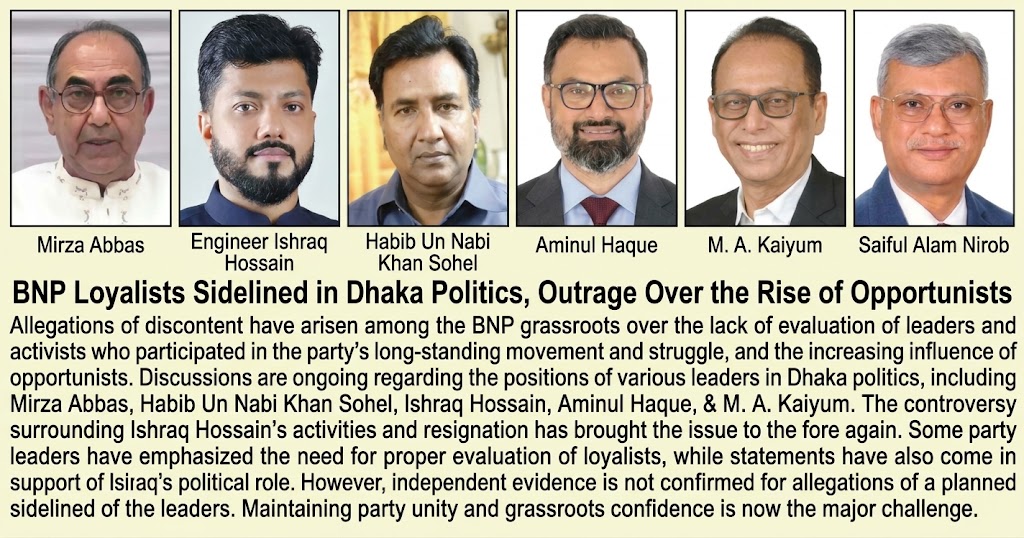
After more than 15 years of facing cases, arrests and alleged persecution during the Awami League government, some Bangladesh Nationalist Party (BNP) activists say they are not receiving the recognition they expected following the party’s rise to power. They allege that long-serving leaders who took part in street movements are being sidelined, while opportunists and recently active party figures are gaining influence.
Some party activists have also alleged that negative campaigns on social media and in sections of the media are being used to discredit influential BNP leaders. However, there is no independently verified public evidence establishing a coordinated effort to sideline these leaders.
Discontent appears particularly visible in Dhaka’s political circles, according to some BNP activists. They point to controversies involving Mirza Abbas, Habib-un-Nabi Khan Sohel, Aminul Haque, MA Kayum, Saiful Alam Nirab and, most recently, engineer Ishraque Hossain, arguing that such disputes could affect organisational cohesion and grassroots morale.
BNP Standing Committee member Gayeshwar Chandra Roy said frustration had grown because the expectations of activists who made sacrifices during years of political struggle had not been met.
“The BNP has formed the government, but we have not been able to do anything for those who were involved in the movement for a long time and became destitute. At the same time, some opportunists have entered the party. This is frustrating for those who made sacrifices,” he said.
Gayeshwar said some activists were becoming disengaged from party activities because of their disappointment. He stressed that party leaders must take responsibility and improve communication with grassroots members.
Recent controversy involving engineer Ishraque Hossain, a former state minister for liberation war affairs, has intensified the debate. Some BNP activists argue that greater attention has been given to the methods used in his anti-drug activities and the controversy surrounding them than to the initiative’s stated objective. They believe the episode has created political pressure on him.
However, questions have also been raised about the methods employed. Islamic speaker Mufti Dr Enayetullah Abbasi said Ishraque’s anti-drug initiative had a positive objective, but the approach was inappropriate. He also claimed that the government was reluctant to take responsibility for the controversy.
Criticising media coverage, Abbasi said the disputed aspects of the incident received more attention than the initiative’s potential benefits. He warned that such coverage could discourage others from engaging in anti-drug efforts.
Rezaul Karim Rony, editor of Daily Jaban, also expressed concern about what he described as political “framing” in the media. He alleged that rumours and one-sided narratives surrounding Ishraque’s case had obscured the central issue.
Some BNP activists claim that influential leaders in Dhaka have faced a series of controversies since August 2024. Those mentioned include former Dhaka North leader Saiful Alam Nirab, BNP Standing Committee member Mirza Abbas, Dhaka South leader Tanvir Ahmed Robin, Aminul Haque, MA Kayum and Ishraque Hossain.
They fear that negative publicity surrounding these leaders could weaken the party organisationally. With local government elections approaching, some activists also suspect that the controversies could be used for political advantage. However, the identities of those allegedly behind the campaigns and the existence of any coordinated plan have not been independently established.
Party activists regard Ishraque, Mirza Abbas, Habib-un-Nabi Khan Sohel, Aminul Haque and MA Kayum as influential figures in Dhaka politics, alongside the legacy of former mayor Sadeque Hossain Khoka. They argue that prolonged disputes and internal divisions could affect electoral preparations and organisational unity.
Many grassroots activists had expected long-serving party members to receive greater recognition and priority in key positions after the BNP came to power. Some now allege that individuals who were not active during the most difficult years of the movement are gaining influence in administrative and policymaking circles.
A BNP leader in Rajshahi said activists who had faced years of legal cases, attacks and imprisonment were now encountering obstacles when raising their concerns. He alleged that some people who had not been visible on the streets during the party’s difficult period were now holding influential positions.
A Dhaka South BNP leader also questioned whether long-serving figures were receiving adequate recognition. He said the treatment of leaders such as Mirza Abbas, Gayeshwar Chandra Roy, Habib-un-Nabi Khan Sohel and Syed Moazzem Hossain Alal could affect the morale of other party activists.
Dr Mahdi Amin, an adviser to Prime Minister Tarique Rahman and spokesperson for the Prime Minister’s Office, outlined his position on social media following the controversy involving Ishraque. Referring to their longstanding personal and political relationship, Mahdi Amin praised Ishraque’s role in the anti-authoritarian movement and the July uprising.
Mahdi Amin said there could be questions and differences of opinion over the methods and procedures used in Ishraque’s recent activities. However, he said he had no reservations about the initiative’s stated objective and ethical intention. He added that Ishraque’s political identity and sacrifices could not be assessed solely through his ministerial position or resignation.
He also said accountability would remain a principle at every level of government and that controversial initiatives should be subject to scrutiny.
BNP Acting Secretary General Ruhul Kabir Rizvi, meanwhile, said Prime Minister Tarique Rahman wanted to ensure accountability within both the party and the government. Rizvi alleged that a section of people had been spreading misinformation since the government began its work for public welfare.
The reported dissatisfaction among grassroots activists over recognition, leadership appointments and participation in decision-making poses an important organisational challenge for the BNP. With local government elections approaching, the positions of influential Dhaka leaders, grassroots participation and internal unity may become increasingly significant.
However, allegations that the campaigns are coordinated or that specific groups are deliberately sidelining particular leaders require independent verification. Controversies involving individual leaders should likewise be assessed on the basis of evidence, with responses from those concerned.
The leadership faces the challenge of ensuring impartial scrutiny and accountability while maintaining the confidence and engagement of activists who played a role in the party’s years of opposition.