
Tanvir Raihan:
The average rate for printing secondary-level textbooks for the 2027 academic year has increased by approximately 43.7 per cent in a year, raising questions about the cost estimates, procurement process and use of public funds in Bangladesh’s free textbook programme.
The average printing rate per form reportedly rose from Tk 2.31 in 2026 to Tk 3.32 in 2027, according to figures cited by former Bangladesh Mudran Shilpa Samity president Tofail Khan. The increase has prompted calls for a detailed review of tender prices, production costs and contract awards under the National Curriculum and Textbook Board (NCTB).
Stakeholders have alleged that irregularities in the procurement process could result in around Tk 300 crore in additional government expenditure. The claim has not been independently verified, and the reported increase in printing rates alone does not establish that the government has incurred losses of that amount.
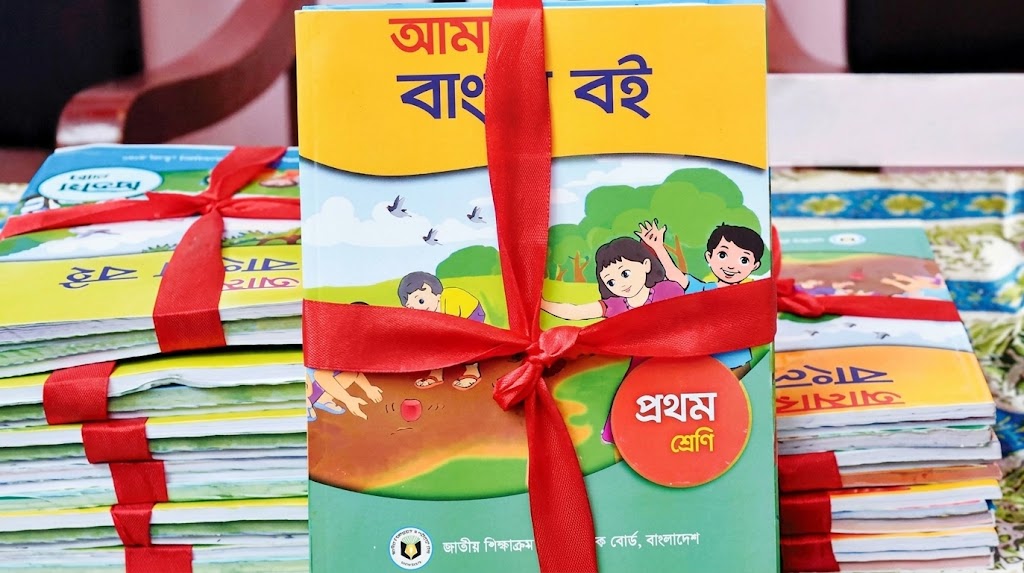
The 2027 textbook programme involves printing and supplying 306,198,101 books for pre-primary, primary and secondary students. The estimated expenditure is around Tk 2,000 crore, compared with approximately Tk 1,600 crore in the previous academic year.
The difference in annual expenditure is substantial, but a direct comparison requires more detailed information. The number of books, page counts, paper specifications, printing requirements, binding standards and distribution costs may differ between academic years. Changes in the prices of paper, ink, fuel, labour and transport could also affect production costs.
A comprehensive assessment would therefore need to distinguish between legitimate cost increases and any expenditure arising from inefficient procurement or improper practices.
Tender documents show that 30 of the 45 tenders issued for the 2027 textbook programme received bids from only one company. Thirteen tenders attracted two bidders each, while the remaining two received three bids each.
The limited number of bidders has raised questions about whether the procurement process generated sufficient competition to secure the most favourable prices for the government.
Tofail Khan alleged that effective competition was lacking and that cooperation between some NCTB officials and printing companies had contributed to wasteful expenditure. He also raised concerns about changes to estimated prices during the tender process.
Such allegations require examination of the original cost estimates, revised estimates, submitted bids and final contract values. A comparison of the winning bids with competing offers and prices in previous years could help determine whether the rates were reasonable.
The fact that a tender attracts only one bidder does not, by itself, prove collusion or overpricing. Investigators would also need to examine eligibility conditions, the availability of qualified printing companies, the size of individual contracts and the reasons other companies did not participate.
SM Mohsin, owner of Proma and Bright Printing Press, denied the existence of a syndicate and said he had not received much work this year. He also said he knew nothing about irregularities in the tender process.
However, sources have separately claimed that his businesses received contracts worth around Tk 120 crore. The claim requires independent verification through official award notices and contract records.
The difference between the reported claim and the owner’s statement highlights the importance of publishing company-wise contract allocations. Such information would allow the public to compare the value of work awarded to individual companies and assess whether the distribution followed transparent criteria.
The Anti-Corruption Commission (ACC) recently collected documents from the NCTB following allegations of procurement irregularities. The document collection does not establish that wrongdoing occurred, but a review of the records could help clarify the basis of the allegations.
NCTB chairman Professor Mohammad Fakhrul Mawla rejected allegations of irregularities and said the board was working to ensure that textbooks reached students on time.
A detailed financial review should compare the 2026 and 2027 printing rates against changes in raw material prices, labour costs, production specifications and contractual obligations. It should also examine whether revised estimates were supported by documented cost calculations and applied consistently across tenders.
The review should establish the value of contracts awarded, the quantities of books ordered and delivered, and whether payments correspond to verified production and inspection records.
Delivery performance also matters. Under the contracts, companies are required to supply 50 per cent of their assigned books within 40 days. Reports that some companies have fallen behind schedule warrant an examination of production progress and the enforcement of contractual penalties.
With around Tk 2,000 crore allocated to the textbook programme, transparency in pricing and contract management is essential. Publishing tender data and making the findings of any formal investigation available would help establish whether the higher rates reflect genuine production costs or whether any part of the expenditure resulted from irregularities.
Ultimately, the central question is not simply why printing rates have increased, but whether the government received fair value for the money spent.