
International Desk:
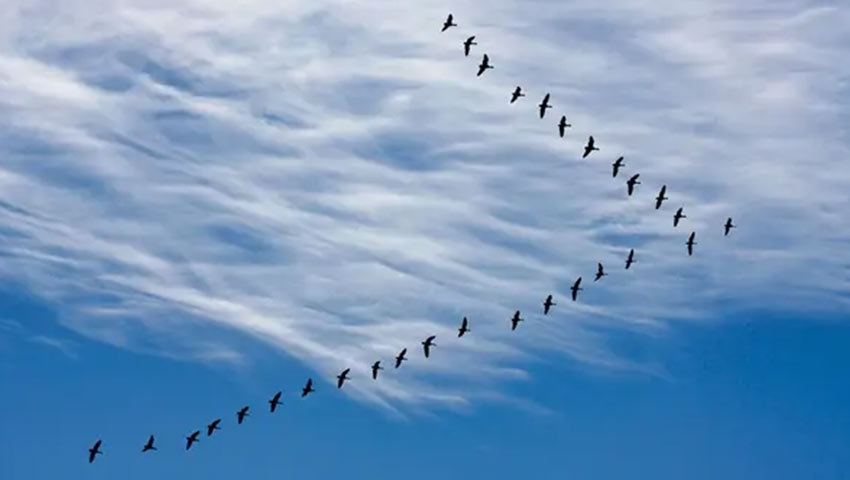
Flocks of birds flying across the sky often attract attention, particularly when they move in a distinctive V-shaped formation. Many migratory bird species use this organised flying pattern during long-distance journeys. But why do they fly in this particular formation? Scientists point to several reasons, including energy conservation, aerodynamic advantages and coordinated group movement.
According to a report by India’s The Times of India, birds primarily adopt the V formation to conserve energy during long flights.
When the leading bird flaps its wings, it creates a pattern of moving air around its wingtips. Birds flying slightly behind and to either side can take advantage of the upward-moving air, known as upwash, generated by the bird ahead.
This aerodynamic advantage helps reduce the effort required to remain airborne. As a result, birds can conserve energy and travel longer distances without exhausting themselves as quickly.
In this formation, each bird generally flies slightly behind and to one side of the bird in front. This positioning allows it to benefit from the favourable airflow created by the preceding bird’s wings.
The arrangement also helps the flock maintain coordination and a relatively organised flight pattern throughout its journey.
However, energy conservation is not the only reason behind this behaviour. Sharing leadership responsibilities is another important aspect of V-shaped flight.
The bird flying at the front faces the greatest air resistance and therefore has to expend more energy than those following behind. Remaining in the leading position for too long can cause fatigue.
To distribute the physical effort, many birds take turns flying at the front. After leading the flock for some time, the front bird moves back and another bird takes its place.
This rotation allows the birds to share the demanding task of leading the formation while maintaining the group’s overall efficiency.
The V-shaped flight formation is considered a remarkable example of cooperation and coordination in nature. By benefiting from each other’s airflow and sharing leadership responsibilities, migratory birds can make long journeys more efficiently.