
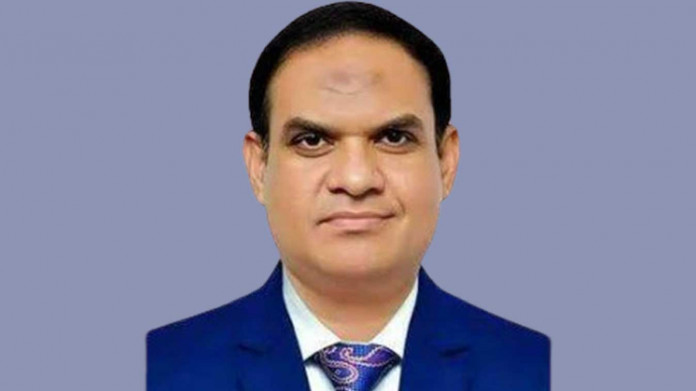
Tanvir Raihan:
Mia Nuruddin Ahmed Apu has emerged as a notable figure in Bangladesh’s political landscape through his longstanding association with the Bangladesh Nationalist Party (BNP), his relationship with Tarique Rahman and his experience of political adversity. A former private secretary to Tarique Rahman, Apu’s political journey includes contesting the 2018 national election, sustaining serious injuries in an attack during election campaigning and spending years in prison.
Beyond his political identity, Apu’s role in the development of Shariatpur remains an important measure of his public service. The district, known for producing scholars, writers, intellectuals, social workers and political leaders, has long-standing aspirations for better infrastructure, quality education, accessible healthcare, employment opportunities and improved public services.
For Apu, translating these expectations into tangible improvements would be central to strengthening his standing among the people of the district.
Trust, responsibility and familiarity developed over years can play an important role in political relationships. Apu served as private secretary to Tarique Rahman, now a leading figure in the BNP. Their longstanding professional and political association forms an important part of Apu’s public profile.
Working closely with a senior political leader can require organisational skills, discretion, reliability and the ability to handle challenging circumstances. However, the precise reasons behind the depth of trust between Tarique Rahman and Apu cannot be established without statements from the individuals concerned and other reliable evidence.
Apu’s political career nevertheless reflects his long association with the BNP and his participation in electoral politics during a period of considerable political tension.
Apu contested the 11th parliamentary election in 2018 as the BNP candidate for the Shariatpur-3 constituency. On December 24, during the election campaign, he was attacked and admitted to United Hospital in Dhaka with serious injuries. Reports at the time said he had sustained significant injuries to his head.
The incident became a major episode in his political career. The BNP accused ruling-party activists of involvement in the attack and described the incident and subsequent legal action against Apu as politically motivated. Such allegations, however, need to be assessed against the findings of investigations and other verifiable evidence.
The attack, his subsequent arrest and his prolonged detention brought further attention to Apu’s political activities and his role within the party.
News of Apu’s arrest was reported on January 4, 2019, while he was receiving medical treatment. He subsequently faced multiple cases and remained in detention for an extended period. The BNP described his detention as political harassment, while the allegations and judicial proceedings in the cases need to be considered separately on their legal merits.
Apu was released on bail on August 6, 2024, after spending approximately five years and seven months in prison. According to reports citing his lawyer, he was released from Kashimpur Central Jail after securing bail in two cases.
His prolonged detention was a significant chapter in his personal and political life. Assessing its longer-term impact on his political position requires consideration of his own account and his activities following release.
Apu is also known as the publisher of the Bangla-language daily Kalbela, giving him a presence in both politics and the media sector.
The relationship between media ownership, editorial independence and the political affiliations of media owners is an important issue in Bangladesh’s media landscape. Any assessment of a newspaper’s editorial position should be based on its published reporting, editorial policies and professional practices rather than assumptions about its ownership alone.
Apu’s public profile has also drawn attention to his reportedly low-key personal style. A comprehensive assessment of his public role, however, requires looking at his political activities, public statements and responsibilities.
Apu’s political future is closely linked to the expectations of people in Shariatpur. Development requires more than political promises; it depends on realistic planning, adequate resources, transparency and sustained implementation.
Improved roads and transport links, expanded access to education and healthcare, job creation, skills development for young people and stronger local economic activity are among the priorities that matter to residents.
Making measurable progress in these areas could strengthen a public representative’s credibility and demonstrate the practical value of political experience and organisational influence.
In politics, personal relationships and the trust of party leaders can be important, but public confidence ultimately depends on accountability, effective initiatives and the delivery of commitments. A leader’s standing is shaped not only by past adversity but also by how responsibilities are discharged in the present.
Apu’s experiences have made him a figure of interest within BNP politics, while his longstanding association with Tarique Rahman remains part of his public identity. His overall political legacy, however, will depend on more than personal connections or the difficulties he has faced.
For the people of Shariatpur, the central expectation is that Apu will use his political experience and organisational position to help improve their lives. Delivering meaningful, measurable development would be the most significant way to demonstrate the value of his political journey.
Chief Reporter, CNSWorld24News.com and Researcher