
Editorial:
The spread of measles in a child is a source of deep anxiety for any family. When a child dies from a preventable disease, it also raises serious questions about the effectiveness of the public health system. Yet child deaths continue amid a measles outbreak that has persisted in Bangladesh for more than seven months.
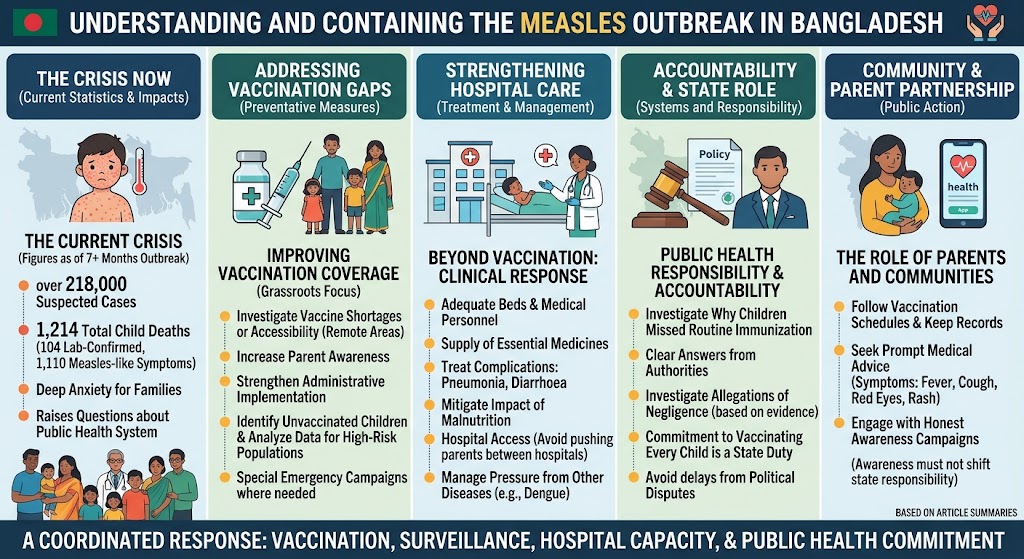
According to figures cited from the Directorate General of Health Services (DGHS), 1,214 children have died from measles and measles-like symptoms so far. Of these, 104 deaths were confirmed through laboratory tests, while 1,110 involved children who died with measles-like symptoms. The number of suspected cases has exceeded 218,000. These figures reflect not only the scale of the outbreak but also raise questions about the effectiveness of preventive healthcare.
An effective vaccine is available to prevent measles. Ensuring adequate vaccination coverage, maintaining regular immunisation and implementing vaccination programmes effectively at the grassroots level are therefore crucial to containing the disease and reducing fatalities. If a large number of children have been left out of the routine immunisation programme, the reasons must be investigated. Whether the problem stems from vaccine shortages, limited access to healthcare in remote areas, a lack of awareness among parents or administrative weaknesses in programme implementation must be determined through evidence. Speculation and political blame games will not resolve the crisis.
The government’s immediate responsibility is to identify unvaccinated children and bring them under the immunisation programme without delay. Data on infection rates by region, the age groups most affected and the vaccination histories of deceased children must be analysed to identify high-risk populations and prioritise interventions. Special emergency vaccination campaigns should be launched where necessary. Ensuring that health workers reach remote and underserved communities and that vaccines are readily available is equally important.
However, the response must extend beyond vaccination. Children with measles may develop complications such as pneumonia and diarrhoea, while malnutrition can further worsen their condition. Hospitals must have adequate beds, essential medicines, skilled medical personnel and the capacity to provide timely treatment. Authorities must also ensure that pressure from dengue and other diseases does not compromise care for children. Forcing parents to move from one hospital to another in search of treatment for their sick children is unacceptable in a functioning healthcare system.
Accountability is equally essential. Authorities must provide clear answers to why so many children were left out of the vaccination programme, where the gaps occurred and whether the responsible agencies took timely action. Allegations of negligence against any previous government should be investigated on the basis of evidence. However, disputes over responsibility must not delay efforts to contain the ongoing outbreak.
Parents also have a role to play. They should follow their children’s vaccination schedules, keep immunisation records and seek medical advice promptly if symptoms such as fever, cough, red eyes or skin rashes appear. But public awareness campaigns must not become a means of shifting responsibility away from the state or concealing weaknesses in the healthcare system. Ensuring access to vaccines, providing reliable information and delivering adequate medical care remain the responsibility of the relevant authorities.
Containing the measles outbreak requires a coordinated response involving vaccination, disease surveillance, stronger hospital capacity, public awareness and accountability. The commitment to vaccinate every child must be translated into effective action rather than remain a paper pledge. Reducing child deaths from preventable diseases is not merely the responsibility of the health sector; it is also a test of the state’s fundamental commitment to public health.